Articles by Dave

You are currently browsing Dave’s articles.

Well, not really, but stops and starts made putting together an introductory video something of a long-term project. Originally started as a response to a request from Glad Tidings Assemblies of God in West Lawn, PA for videos from the missionaries that they support, we decided an intro video could serve our website guests as well. We made two versions, one to be shown on a Sunday Morning for the church and one to introduce our family and ministry here on discipleMexico.org. So here, without further ado, is our very own introductory video. (Click on the flash player to the left to launch it or here if your are receiving this update via email.)

In addition to this new video, we’ve totally revamped our About Us page, adding this video as well as descriptions of our individual callings. And, for those of your who have yet to friend us on Facebook, you can check back to keep abreast of our current status. Just a few new ways that we’re trying to keep you connected to what’s happening here in the Yucatan.

The amazing scientific mind, Sir Issac Newton, is quoted to have said, “If I have seen farther it is by standing on the shoulders of Giants.” Here in the Yucatan, if we have had any impact is because great men and women of God have forged the way before us.

Friday evening we had the privilege of hosting one such giant here in our home. Nancy Cave, along with her daughter Cristiana, came through Mérida on their way to Campeche where she ministered along with her husband, Dave, for 10 years.

Nancy and Dave, responding to the need that Superintendent Alfonso de los Reyes presented to them, made the Yucatan their home and had a tremendous impact. They were involved first in evangelism, but their servant’s heart never said “no” to a need. Dave was involved in construction, everything from furniture to entire Bible Schools. As a couple they received teams, sometimes three at a time. They ministered in campaigns, at times in the Maya language, and their work reached out to all ages.

Dave recently passed away from a prolonged battle with cancer. You can read his memorial at our fellowship’s website. His ultimate months were spent in the States receiving treatment, but his heart was always in the work. His dream was to return, but it was not to be. However, days before he went on to his reward, a Mexican pastor, who had heard of his condition, sought him out in his hospice room. When Dave saw him, his face brightened and he immediately entered into an animated conversation in Spanish about Mexico and the progress of the work. Nancy told us, “He couldn’t return to Mexico, so Mexico came to him.”

As we left Nancy and her daughter at the bus station in Mérida, bound one more time for Campeche, I thought about our work as missionaries. Ours is a relational ministry. The work that we do and the attitude that we convey leaves a lasting impression on the national church. What we do now will determine in large part the effectiveness of those who follow us. We’ve been blessed to have the wonderful foundation that the Caves laid on which to work. Therefore, as Newton said, if we have seen farther, or have have made a difference here in the Yucatán, it’s because we’ve stood on the shoulders of giants–because we’ve been given the privilege to continue the work that the Caves had started.

Preaching Friday night, teaching Saturday morning, a week long class next week, the schedule keeps on piling up. The difference is, I’m not the one who’s dealing with it, it’s Kelly. Being invited to preach in a youth service, leading a Saturday Morning Kid’s Service, and teaching during our church’s Vacation Bible School has kept Kelly occupied, planning and preparing. So much so that I’ve decided to take some flying lessons. No, not that type of flying.

Actually, flying is a clever way of talking about housekeeping that Marla Cilley a.k.a “the FlyLaydy” invented to encourage those who would like to keep a clean house, but were never “born-organized” to achieve that dream. With my Kelly out of the picture for long stretches, I needed a little bit of motivation to help me pick up the slack around the house. So I turned to the site for tips and routines that would help me keep the house up, while enabling me to devote time my kids, who just got out of school last week. Fortunately, although FlyLady.net is definitely geared to the feminine audience, I found lots of time saving techniques that have helped me to let Kelly devote herself to her preparation, while keeping me from a nervous breakdown.

In fact, as I have been swishing toilets and scrubbing pans, I found myself thinking of the spirituality of it all. No, I’m not saying that doing the dishes is helping me get closer to God, but switching roles has helped me understand a bit more about ministering as a missionary couple. Ephesians 5:22-33 is the classic passage on the husband and wife relationship. Wives are to submit, while husbands are to love. What many of us miss, however, is that Paul, in verse 21, commands all to submit to one another out of reverence for Christ.

Now, I am not saying that Kelly is now ordering me around or leaving honey-do lists on my pillow in the morning, but what I am saying is that there are times in ministry, and I could say in secular life as well, that the husband is up front, doing the public relations and making the decisions. There are also times when that shoe is on the other foot, and the wife takes the lead. Perhaps this is what Paul was saying when he recommended Phoebe to the Romans saying, “After all, she has proved to be a respected leader for many others, including me.” (Romans 16:2 CEV)

So this week, Kelly has become the face of our public ministry. She’s been the one up front, going to meetings and making the decisions, and that’s a good thing. I’ve submitted to what the Lord is doing through her during this time knowing that He’s called us both to serve Him here in Mexico.

Speaking of what the Lord is doing, I’d like to request that you say a prayer for Kelly this weekend, and if you can, remember her throughout next week. I’m sure she’d appreciate that, and while you’re at it you can pray for me as well–dishpan hands can be really annoying.

As Jesus sent out the 12 in Matthew 10, He gave them the motive for their ministry in verse 8: “Freely you have received, freely give. Their mission of mercy–healing the sick, casting out demons, and even raising the dead is the logical response to the mercy that they had already received in the form of God drawing near. They had seen Him, touched Him, and from Him received divine power. In Matthew 10, they are sent out to tell others about Him.

What Jesus modeled is the end of any discipleship program. He made disciples who in turn made disciples, and, here in the Yucatán, we had the privilege of seeing this cycle come full circle. This past Saturday night, the ministers and members of the Assemblies of God of Yucatán met to commission and send out Norma Uitzil, a missionary, born here in Yucatán, who will be ministering among the “Untouchables” of Calcutta, India.

Yucatán has freely received. Silverio Blanco, the director of the Bible Institute, took time during the service to tell of the first evangelical missionaries who arrived in 1866 to preach in what was then the inhospitable conditions of this predominately Maya state. Since that small beginning, many have come, Presbyterians, Baptists, and Pentecostals among others. In what was once an area devoid of believers, now roughly 1 in 10 attends an evangelical congregation. Granted, there is plenty of work to be done, but the work here in the Yucatán has entered a different stage. It is time for this district to take its place in the evangelization of the world, and missionary Norma Uitzil is one of the first to respond to that call.

About a year and a half ago, I spoke of Jaime and Jaqueline Chacon, missionaries from Costa Rica that are now serving in the U.S. I echoed in that post the words of our regional director, Dick Nicholson, who said that missions is no longer the U.S. or the traditionally Christian Nations that are sending missionaries to the ends of the earth; missions has become a movement in which God is calling people from everywhere to go to everywhere. We believe more than ever in that idea. To that effect, we are currently heading up the missions program in the church that we attend, and we are committed to continually preach missions in the various congregations in which we are invited to speak.

Some might say that it is an impossibility to promote missions in an area where the minimum wage is $5 a day, but people like Norma are proving that we serve a God who makes the impossible possible. So, as we were called forward to pray for her, I asked as well that God would begin to call others to respond to His world-wide mandate, that others would hear His heartbeat for the nations and dare to believe that they can make a difference. After all, freely we all have received, its only natural that we all freely give.

It’s a common scene, actors, tears streaming down their faces, holding their award, reciting the list of people who contributed to their success, and although recent years have seen limits placed on award acceptance speeches, we’ve come to expect the laundry list of names; we’ve come to think of it as a natural part of graciously recognizing that one’s accomplishments are not achieved without the contributions of others. It’s funny though, when we think on special occasions, like the Father’s Day that we just celebrated last Sunday, we tend to bask in the attention and forget those who’ve made us the fathers that we are, our kids.

As I woke up Sunday morning, on the breakfast table sat the new desk set that Kelly had purchased for me–a letter organizer, a pen holder, and a nifty paper clip dispenser, but what gave me pause was a picture frame holding the image that you see above. Immediately, it put the day in perspective. If it wasn’t for my kids, I wouldn’t be a father. So permit me to brag on them a bit in this post.

Rebekah our oldest, aside from being the beautiful 9 year old that she is, is a voracious reader and extremely intelligent individual. When it comes to trivia, she loves to be right, and usually is. Not limited to book knowledge, however, she’s amazingly creative and has style all her own. She’s a lover of animals like her mother, especially horses, who she hopes to treat one day as a veterinarian.

Joseph is our dreamer. He’s got big plans and the persistence to achieve them, but he doesn’t just have his head in the clouds; he’s firmly planted on the ground, often on all fours inspecting the latest insect that has caught his eye. We expect him to take up a career as an electrician, planning skyscrapers or as a biologist studying the nature that he loves.

Jonathan, our youngest, is a happy-go-lucky kind of kid. He knows no strangers and is quick to converse with whoever might be around. He has a natural kindness and an attention to detail that enables him to know just when to use it, be it to give the timely hug to lift a parent’s spirit or the well placed comment to receive the sip of juice or cookie that he’s had his eye on. We expect him to take up a career in public relations.

Yes I’m a proud father, and although it’s come with it’s challenges I’m thankful for the ones who have made it possible for me to be called Dad. And while I have them with me, I’m intent on enjoying every moment.

Spring 2008 NewsletterOur print newsletter hasn’t yet made to the printer, but you can get the electronic copy here at disciplemexico.org in advance. Just click here or on the photo to get up to date.

Remember, in order to read the newsletter, you’ll need Adobe Acrobat reader, which is available for free.


I just finished up another evangelism conference, this marking my sixth opportunity to hold such an event here in the Yucatán. With more experience comes more confidence in sharing the material, but that experience also brings a certain familiarity with the topic–an anticipation you could say of the inquiries and the reaction of the audience, but during class this last Thursday, a question was asked that I hadn’t anticipated.

We had been studying Mark 6:30-44, the account of the feeding of the 5,000, and contrasting the disciples’ reaction to the crowd’s needs with that of Jesus. Analyzing the context, we concluded that the disciples’ inaction and Jesus action was related to a key element, compassion. Jesus saw the plight of the crowd and the compassion that he felt moved him to action even though he was in the midst of extreme personal sorrow. The disciples, coming off of a successful preaching tour, failed to react because their lack of compassion.

Usually, the anticipated question is “How do we learn to react in the way Jesus did?” a question that I anticipate and answer within the lesson follow-up, but this time an unanticipated question was raised; a student asked: “Should we act compassionately first and then preach, or should we preach first and then display acts of compassion?” Caught off guard, I had to think a bit about the question. I wanted to know what it was that this student was trying to clear up in his mind. His clarification clued me in. Some organizations emphasize compassionate acts, feeding programs, rehabilitation centers, and medical clinics while others emphasize teaching and preaching engagements. This student was trying to understand what stance we should take in the debate between presenting evangelism as a moment of decision or what what some call the “social gospel.”

The question illustrates the danger of thinking in predefined categories. It can cause us to limit our outreaches to traditional activities like preaching, teaching, and passing out tracts while avoiding food distribution or medical clinics in an attempt to show our emphasis on “telling the good news,” or it can cause us to add mandatory evangelistic events to our “social outreach” in order to justify the undertaking, a practice that can lead others to criticize us as evangelicals for opportunistic proselytizing, or can lead to the phenomenon of “Rice Christians,” those who confess Christianity as long as the hand outs keep coming.

Separating compassion and preaching/teaching into separate categories should make us ask the questions: “Is our preaching without compassion?” and “Is social outreach condemned or considered second-class by scripture?” Obviously the answer to both questions is no. The real question, therefore, should not be, “How should our evangelism look?” but rather, “How should our evangelism be motivated?”

Returning to the passage in question, we see that Jesus taught and fed the needy crowd. There was no separation of his actions into evangelistic and social. Rather compassion motivated him to meet the need before him. Jesus wasn’t checking off items on his list; he was instead showing us that the compassionate response considers its recipient as a whole person.

Interchanging the word compassion for love can perhaps clarify the point. Paul, in trying to settle church division in Corinth, culminates his argument for unity with the famous love chapter of 1 Corinthians 13, which he introduces as “the most excellent way.” In his opening words, he lists both “spiritual” (prophesy and tongues and the practice of faith) and “compassionate” (giving to the poor) acts as worthless without love. It’s little wonder then that 1 John 4:12 says that we would be known to be true, not for our excellent Bible teaching or for our hospital building, but rather for our love, and this is fitting because love when perfectly applied led to eternal life. (Jn 3:16)

Reaching out to a lost world in love then enables us to push past the categories and throw away our checklists. Ultimately it allows us to utilize the appropriate means to communicate God’s love, be it through a cup of cold water or an offer to pray the sinner’s prayer.

Learning and encouraging the most excellent way here in the Yucatán,

Dave

I’ll be traveling to Florida next week in order to attend an ACLAME summit where teachers across Latin America will be meeting to discuss what we do as missionary educators. This upcoming convention has given me pause for thought about my own experience some of which I’d like to share with you today.

As I’ve been here in Mérida, I’ve had the privilege of teaching for a year and a half in the Bible Institute. This is a job that I have met with much fear and feeling of responsibility. As James says, “Not many of you should presume to be teachers, my brothers, because you know that we who teach will be judged more strictly.” I understood the need to prepare myself mentally and spiritually for the task before me, something that my family could attest as they frequently find me in my “cave” praying and writing, trying to sort out what I am to share with my classes.

Nevertheless, as I become more aware of the environment that I find myself in, I have found something that I was not prepared for. I entered into the learning environment with expectation. I was under the impression that the students that I would be teaching would be looking for answers, trying to hone their skills in order to seek the gospel take root in otherwise fruitless ground. I expected students to challenge me with their questions and compel me to further study as we sought to practically apply the theology that we assimilated each day, and in some cases, this is what I have found. But as I look over the half-finished assignments and the failing grades of others, I’ve faced a different reality, one that is in stark contrast with my expectations.

So I’m left with the task of answering the question, “what am I doing wrong?” Bruce Wilkinson, a teacher associated with Walk Thru The Bible Bible Ministries, says that motivating his or her students to learn is the task of the teacher. Therefore, if I am to be brutally honest with myself, and if I am to take James’ admonition at face value, then I need to reevaluate my teaching style and find out how I can reach those who fail to excel in their studies.

The Bible College system in Latin America accepts all students who feel called to the ministry regardless of their educational background. They need only letter of recommendation from their pastor in order to gain entrance into the program. This means that many of those who study lack the essential tools that they need in order to complete the requirements of the classes that they enter. I have found that the majority of students have never written a paper or done an investigation. One of my students admitted to me that her studies only reached as far as the fourth grade!

What does this mean? First, it seems to imply that education, according to my interpretation as the exchange and analysis of ideas is not necessarily the goal of my students. Instead, they are looking for intensely practical and readily applicable methods that they can use now in their context. They are not interested in asking questions; they are looking for answers. Therefore, my task as professor requires me to meet the expectations of my students by providing them answers while at the same time builds the tools that they need to make learning a lifestyle.

I find myself taking the role of a Mr Miyagi of the Karate Kid. Daniel, his student, wanted to learn to fight, but Mr Miyagi only left him to menial tasks like painting the fence and sanding the floor. Only when Daniel blocks a series of kicks and punches with techniques that he had learned by painting and sanding does he come to understand and appreciate Mr Miyagi’s style. So I’m restructuring my teaching style. Instead of driving ahead in order to complete the material, I am finding myself teaching concepts of research and reasoning, helping students formulate good questions for interviews, and locating good resources in the library. I’m breaking concepts down and trying to reinforce small steps toward large goals, all the while seeking to illustrate how the job of the minister makes the learning of each tool we cover essential.

On one hand, I lament not being able to get to “the meat” of the course, but at the same time, I realize that formal education, if it is honest with itself, must admit that it cannot impart all knowledge. I have only 3 years with a Bible School student. That is an incredibly short amount of time to communicate knowledge. Furthermore, I have to admit that I have forgotten far more that I have internalized over my 8 years of higher education. However, if I seek to impart the tools necessary to study, and convey an attitude that promotes learning, I can create a lifetime learner, an investigator who seeks to find the answer and apply truth in such a way as to create change. I guess that you could say that my goal is to create someone like the Karate Kid, who will find they have what it takes to survive and thrive in a world increasingly hostile to the traditional Christian message. I appreciate your prayers as I attempt to make this happen.

I have to go right now though. There is a fly buzzing and I need to find my chopsticks.

Is this a slip of the English language or a new theology?

The English language is much in demand here in the Yucatán, especially with the tourism that places like Chichén Itzá attract, so we often run into students who want to practice what they’ve learned with us as we go about the city. Businesses as well like to get into the act, capitalizing on the popularity that English enjoys, and billboard and signs in English are common. Unfortunately, some businesses such as the one above use English but don’t quite understand it.

This sign in the picture says: “Super 32 Thanks God is Monday” I’m trying to decide if it’s a Monday morning encouragement or a new theology. So far we’ve not had the chance to ask the owner about it. In the meantime, what do you think? Do you have any ideas as to what they might be trying to say? Leave us a comment if you’d like to take a stab at the interpretation.

It’s Hot!

It\'s hot out there!

Enough said?

I have the pleasure of reading some excellent blogs about missions and discipleship. Recently, I came across this excellent post from Guy Muse a Baptist missionary to Ecuador. He writes:

Everyday for the past two weeks and continuing for two weeks more, our team has been teaching groups of fifteen pastors who are coming to Guayaquil from all over the coastal region of Ecuador. They are being introduced to our COSECHA (Harvest) discipleship/church planting training materials that will be used to reach the goal of 1-million disciples in one year.

The heart of the training is making disciples. The only way to win/disciple a million in a year is to begin making disciples that make disciples. Nothing new. But are we doing it? Am I doing it?

If we are out there everyday exhorting everyone about the priority of making disciples, who am I discipling? My biggest fear everyday in the trainings is that someone will bluntly ask me who I am discipling!

These strong soul-searching words hit home. We solicit funds saying that we are going to reach the lost, and yet, as we look at our schedules, our calendars are full of spiritual retreats and Bible conferences. Our to-do lists include research for Bible school classes and fund raising for church projects, but discipleship, defined as reaching and training followers of Christ, seems surprisingly absent. If we were to truly provide evidence of meeting our goals of reaching the lost based on our professional activities, it is highly possible that we’d come up short.

But why? God forbid that we would have intentionally mislead churches into thinking that we were doing something that we are not. I think that we hit the ground intending to see lost people saved and an impact made in the community where we live. So what keeps us from being able to see the results that we so desire?

One reason I believe that this happens is because of our dependence on the local church as we get our “feet on the ground” in ministry. As we arrive in the community where we minister, we look for people to help us establish our lives in the foreign context. We need everything from furniture to handymen to help us to get started and build a secure environment for our families and a base from which we can work. Being representatives of a religious organization, more often than not we find that help coming from Christians.

This in itself is not a bad thing of course. There are few things more assuring to a man or woman who is dealing with his or her second complete move in a year to two separate and absolutely foreign environments than to be able to delegate important tasks to another believer who will treat him or her honestly and amicably as the missionary stumbles through cultural adaptation and adjustment. However, the downside to all of this is that we begin our experience in that new culture by building a cloistered environment for ourselves that keeps us from relating with neighbors who do not have a relationship with Christ and may be seeking the message that we came to share.

Further complicating the matter is the fact that these Christians generally introduce us to other Christians who then invite us to address any number of groups and participate in any number of events generally frequented by other Christians. Before we know it, we are deeply entrenched in a Christian culture and, although busy, have severely hindered ourselves from having a real first-hand impact on the predominantly non-Christian world that we live in.

Now don’t get me wrong, I believe that those of us who serve a predominantly Christian audience, doing leadership training and pastoral conferences, do a great deal of good. Nevertheless, there is a question that haunts me: Does my professional schedule exempt me from fulfilling the Great Commission?

Another often repeated concept is that most of what is learned, that is what is transferred and actually applied to a person’s life comes through the teacher’s ability to model what he or she is communicating. In other words, that which is learned is more often caught than taught. This serves as well to make the reality all the more convincing, we as missionaries can’t just train disciplers we have to be disciplers ourselves.

But how? How can we who have been caught up in the busyness of the ministry refocus our lives in order to prioritize discipleship ministry? I have a few ideas:

  1. Don’t stop preaching discipleship. Our continued involvement and reflection on the theme will continue to motivate us to “practice what we preach.” It will also enable us to explain our inability to fulfill expectations that others may try to place upon us that do not enable disciple-making ministry to take place
  2. Expand our circle of influence intentionally to include non-Christians. This requires an honest look at our lives in order intentionally create relationships with those who do not know Christ. Are we truly like our Master who was known as a friend of sinners?
  3. Look for opportunities everywhere. Discipleship opportunities can take place over a play-date with the kids or a late night greeting across the street. But we need to look out for them, recognize them for what they are, and utilize them to bring seekers closer to a relationship with their God.
  4. Be in constant prayer. When I prepare for a meeting or a teaching, I can control the elements. I pick the theme, the illustrations, and the length of time that I am going to speak. As a discipler, I don’t have these luxuries. I have to rely on the Holy Spirit for direction and clear insight into the matter at hand. Hearing his voice is only enabled as I practice acknowledging his presence in every moment.

These things are coming to pass in our lives as we have evaluated our ministry and daily life here in Mérida. I’m happy to report that we can count many non-Christians now as our friends. Pray for us as we engage ourselves in their their lives and adjust our schedules to keep discipleship a true focus of our ministry.

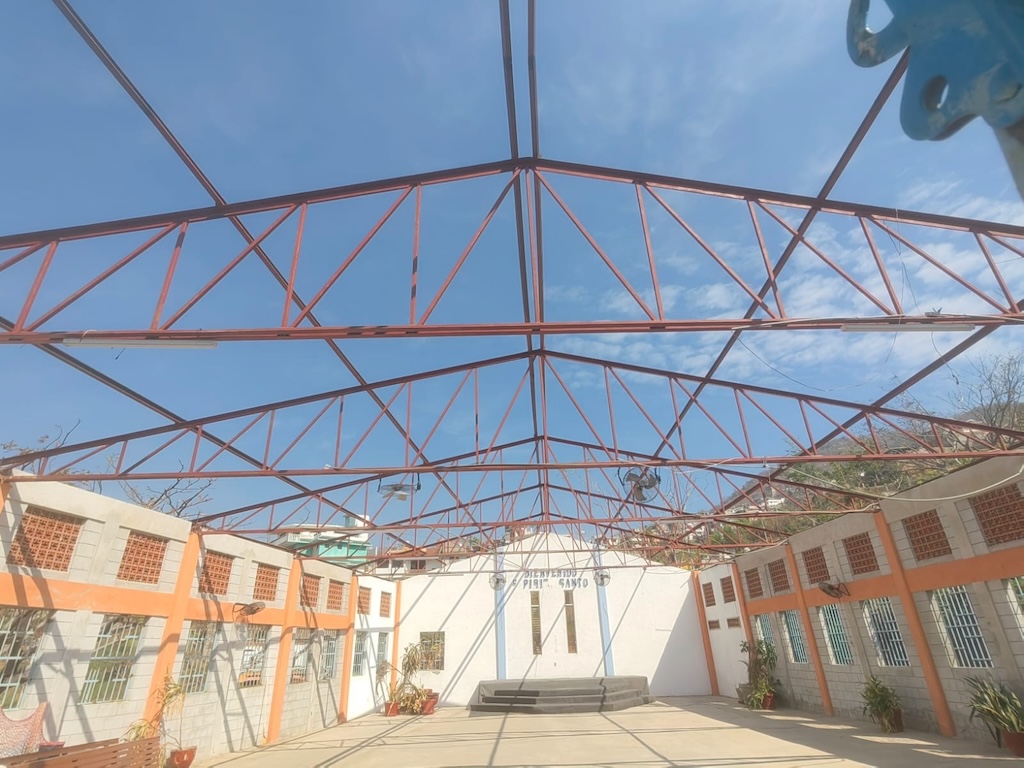
Door to the church called \"El Tabernaculo\"I don’t consider myself a builder. I’ve never created anything that I can remember, except maybe the lopsided pencil holder that I made for my mom in my Boy Scouts basket weaving merit badge class. Still, I can tell when things aren’t quite right. That’s exactly Pastor Rudy Manzano noticed shortly after he took the pastorate of “El Tabernaculo” church in Yaxkukul. The roof above his congregation was bulging in the middle, a sure sign that things were amiss.

He spoke with an engineer about his problem and asked him to give him his opinion. What he had to say was not what he wanted to hear. The beams that held the roof in place had not been cured correctly. Therefore, they were unable to hold the weight of the blocks and the cement used in its construction. The roof was in danger of collapse. It had to go and soon.

So the congregation tore down the roof. The danger has passed, but now they face a problem. The rains are on their way. Beginning in May, the Yucatán receives rains almost each afternoon, and hurricane season from July through November means that it will be months before this congregation will have a building to call their home.

Kelly, the kids, and I had a chance to visit the site on Sunday. Being the type of person that likes to worship outdoors, I found the service under the blue skies to be a welcome change from the traditional unfinished concrete structures that characterize so many Assemblies of God churches here in the Southeast. Still, I knew that my breath of fresh air was a day-to-day burden for Pastor Rudy and his congregation.

I preached on faith, from Mark 7:24-30 the story of the Syrophoenician Woman, and I spoke on resolutely seeking after God. In the passage, the woman surpassed the spiritual understanding of even Jesus’s disciples as her response to a supposed rebuff revealed a truly amazing faith.

Many times we feel that obstacles are things to be avoided. Pain and suffering are products of bad choices, or even worse, sin. But in Mark 7, and I venture to say in the situation in Yaxkukul, that isn’t the case. Suffering in the case of Syrophoenician Woman caused her to resolutely seek an audience with Jesus and not be put off until she had her response. In the same way, I see the loss of this congregation’s roof as an opportunity for them to see the hand of God moving in their lives.

We had a chance to speak with the Pastor Rudy and his wife Laura at length following the service, and we found them upbeat in the face of this situation. It didn’t take long to find out why. Their oldest daughter, now attending high school had battled years before with a life threatening case of pneumonia. The strength they found in their faith brought them through that crisis. Now, they wait patiently on God knowing that He will yet again provide.

The wonderful thing about the family of God is that we have an opportunity in this situation as well. We can be an instrument of God’s provision for this congregation. The people of Yaxkukul are doing what they can, but it will take time for this group to get together the $13,000 that they will need to finish the work, time that they do not have.

Would you consider being a part? If you would like to donate directly to this work, you can give through this secure web-server by entering your offering and the project name and number “RECONSTRUCTION OF CHURCH ROOF TABERNACULO” #14312.”

For pictures of the project click here.

OK, for those of you looking for something more profound, I’m sorry to disappoint. This post is devoid of deep thought. Instead it focuses on the technical side of my portfolio here in Mexico.

Part of what I do here in Mexico deals with maintaining my website, and the website of our Missionary Fellowship. Maintenance has a lot to do with staying current, and when the web management software that you use tends to upgrade every three months, staying current can be a challenge. I use WordPress as the engine that drives what we do at discipleMexico.org and today, I completed the upgrade process to the brand new version 2.5

Part of my reasoning behind the upgrade is to ensure the security and stability of our website. There are many languishing installs that are currently succumbing to hackers and spammers and losing their status in search engines because of it. Problems like that can hurt non-profits like us who rely on a low-cost web presence to promote their message. It pays to be current.

The other part of my reasoning lies in taking advantage of new features that the software provides. I’m on the lookout constantly for step savers or ways to extend what I offer. I was particularly interested in the WordPress 2.5 gallery feature. If it worked, it would allow me to ditch my another process and help me get pictures up more easily, and perhaps more frequently. Of course, that was only if it worked.

The first upgrade, a 5 minute process performed through WordPress Automatic Upgrade failed to produce the brand new uploader which is the heart and soul of the new gallery feature. Without that, my new time-saver was dead on arrival. OK, time to trouble-shoot, an hour of trying this and that proved fruitless. Only a complete reinstall of the software, this time manually installed, allowed me to access the new uploader.

OK. Step one solved, now on to the next, producing a gallery. I looked for examples to see what this new tool was capable of. Would it fit the bill for my site? A quick tour of the Internet proved promising, but my first gallery was a flop. With no navigation, the supposed gallery seemed unwieldy and useless. It looked like I was going to be tied to my third-party solution. Still, something in me said that there was a solution out there. Others would not have been able to get the results that they had achieved without software mature enough to deliver.

A deeper search revealed that the gallery feature relies not only on the new uploader, but also on a new template called image.php, available in the default theme. Part of the problem of heeding the upgrade warnings that WordPress sends is that many of the new and improved features are poorly documented. Tags were a case in point a few releases back. This time the photo gallery has proven to be the winner.

Sure enough, copying the image.php file to my current theme did the trick. With a few tweaks and a few bug fixes, I achieved success. My first WordPress native gallery was born. I’ve posted it below. It’s a conglomeration of some prominent images characteristic of the Mexico that we have experienced. It’s not exhaustive, but it displays a bit of what the WordPress gallery can do. I hope you enjoy.

Easter Cross

Many thanks to all who were instrumental in prayer during this trying week. Kelly and I were both down dealing with different sicknesses. Hers was an amoebic infection while I was flat on my back for many days as the doctors tried to determine which antibiotic was going to vanquish my dreaded nemesis, the sinus infection. We are both back on our feet again, the blessed recipients of the care and concern, (thanks Kazims), prayers (thanks especially to Carlos who called and prayed with me), and the understanding of 3 wonderful kids (thanks Rebekah, Joseph and Jonathan.)

During my convalescence, I had little to do save read, and read I did, voluminously. My most profound experience came through the words of Philip Yancey in his book “The Jesus I Never Knew.” It is an excellent work on the Jesus that came near, analyzing his personhood, teachings, miracles, and legacy.

A concept in this book spoke to me as I lay there waiting for my body to respond to treatment, waiting for my healing to come. There were moments of despair, frustration and to be sure pain. I was “in-between.” I had been given what I had needed in order to heal. I had the promise of health from the doctor, I just needed to wait. However, as the moments stretched to hours and the hours to days, the waiting was difficult, tedious, dreadful. I was tired of the delay.

We who hope for redemption are in this state of “in betweenness,” the time between Christ’s ascension and His return. Yancey says it is a sort of Saturday. He states that both the other two days, Good Friday and Easter Sunday have names on the Church calendar. But we who live in this time live on Saturday, the day with no name, the time between the promise and the fulfillment, and to be sure we fret, and become frustrated, and we despair. All around us are the signs of the decay of this world–sickness, corruption, poverty. Even our own bodies remind us that, despite our struggle to overcome, we’re made of the stuff of this earth. Yancey explains:

What the disciples experience in a small scale–three days in grief over a man who died on the cross–we now live on a cosmic scale. Human history grinds on, between the time of promise and fulfillment. Can we trust that God can make something holy out of a world that includes Bosnia and Rwanda, and inner-city ghettos and jammed prisons in the richest nation on earth?

And I ask myself: can I trust that God can make something holy out of my setbacks, my failures, and even my infections?

It’s Saturday on planet earth; will Sunday ever come?

Yet in the same way that three days of grief came to an end that Easter morning now over 2000 years ago. Our promise too will be realized because:

Easter opened up a crack in the universe winding down toward entropy and decay, sealing the promise that someday God will enlarge the miracle of Easter to a cosmic scale.

My waiting of sickness is over. My body has responded, I’m recovering, and thankfully, so is Kelly. Still, in the meantime we wait; we wait for all to be set in order, we wait for our final redemption while we hold out hope to a world increasingly reluctant to respond. But we know, despite what Paul calls our light and momentary troubles, our waiting is not in vain. Our King will come!

Photo by jaqian

There’s an old song that says “I get by with a little help from my friends…” It’s been a full two weeks since my last post, and I have much to tell about the missions trip that we hosted and the work that we accomplished, but I’ve been sick. Yes, sick like last year. So this latest offering is offered with the help of my friend, my brother to be exact. Here is a highlight from the Chi Alpha missions trip that he mentioned on his blog:

One of the most rewarding parts of the trip was seeing the result of our work last year. At the end of that week, we met a man named Daniel. He was a member of the church in Muna and the tour guide for our visit to the Mayan ruins of Uxmal. During our time together, he mentioned to Dave how much he liked our presentation and that he would love to develop the church’s evangelistic outreach. That conversation opened the door for Dave to begin training church leaders in sharing their faith. Together, Dave and Daniel set up opportunities for us to work alongside trained church members sharing the gospel in 5 different communities. Amazing–and to think it all began on our day off from “missions work!” I thank God for the opportunity to see the impact of our trip first-hand and I can’t wait until next year.

Spring 2008 NewsletterOur print newsletter is on the way to press, but you can get the electronic copy here at disciplemexico.org in advance. Just click here or on the photo to get up to date.

Remember, in order to read the newsletter, you’ll need Adobe Acrobat reader, which is available for free.


We’ve made it back from our second annual Chi Alpha Spring Break Missions Trip in Yucatán. (You can read about the first one here) We are still in recovery mode following 8 days of hard labor and evangelistic services, but we didn’t want to let time slip away without filling you in on some of the details. This post and its companion video speak of the impact that missions trips can have on its participants.

Cenotes are a common feature of the landscape of the Yucatán. Cenotes are created when the acidic rain region eats away at the limestone bedrock. Eventually, water filled caves are created by this continual erosion. When finally the roof falls in, the cenote is revealed.

Cenotes today are a welcome relief to the Yucatán heat. Their cool water and regulated temperatures serve as a refuge and source of recreation for many, but, years ago, cenotes were a primary water source and a site of religious ritual.

Because of the lack of rivers, streams, and lakes, cenotes were the main source of water for the indigenous Maya that populated the region before the Spanish conquest. Furthermore, cenotes were thought to be the entrance to the Maya watery underworld known as Xibalba (prounounced she-bal-ba. For this reason, in many cenotes can be found pottery, jewelry, and other offerings as well as human remains in such cenotes as the Sacred Well at Chichén Itzá.

Why all this talk about cenotes? Well it just so happens that this natural limestone formation, so important in ancient and modern times has just taken on a new significance in the life of one of our team members, Ashley Wall. A return member of our team, she decided to be baptized in a cenote near the city of Muna, where we did the majority of our work.

This cenote is a rather young one; it was uncovered by a family drilling for a well some years ago. So there was little fear of encountering ritual remains as we entered, but still, the connotation cannot be dismissed. This ancient source of life-giving water gave witness to a declaration of dependence on the Water of Life, Jesus Christ. This shadowy entrance into the underworld was converted into a place of rebirth, and this refuge from the heat became a symbolic bath where sins were washed away.

We hope that you enjoy this installment from our Chi Alpha Missions Trip ‘08 and rejoice with us as we congratulate Ashley for taking this step of faith.

Evangelism Preparations

We are preparing for a busy week of ministry as we receive my brother, Mike, and his team of 9 students from the Chi Alpha Campus Ministry at American University. Instead of choosing a party spot, this group has decided to invest their Spring Break in ministry, trading a beach towel for a shovel and all night partying for evangelistic rallies.

The group arrives at the Mérida airport tomorrow at 9:00 PM, but that’s not where the story begins. This event has been in the planning stages since November of last year, and it’s scope is larger than anything we’ve attempted before.

Preparations began with two intensive evangelism training courses held in Muna and in Mérida. In these sessions, 4 churches had the opportunity to learn about personally communicating the gospel. We encouraged each student to focus on a list of five individuals that they could evangelize, praying, serving and sharing with each person in the months that preceded the arrival of the Chi Alpha team. The team in turn was preparing to share a gospel message, with the hope to be able to share this message with people who are ready to receive.

At this point, the excitement is brewing with several churches looking to capitalize on the special event that is the ministry of these college students. In Abalá, a village 1/2 hour away from Muna, there are plans to plant a church, in Opichén a town on the route to the Maya ruins of Uxmal, the town square is being reserved for the event. In Muna, the evangelism committee has painted 20 walls with the phrase: “Do you feel dry?” (Te sientes Seco?)The answer will be brought as the team distributes water and an invitation to the night’s service that says “Jesus is the water of life!” In Sacalúm the church has planned a 3 night campaign that the team will open on Wednesday.

Thinking about all of this, I can’t help but smile. Our desire when we arrived in Mexico was to serve as a catalyst within the state of Yucatán–an element that would enable the local church launch out in ministry. As this event begins to take shape, I have the feeling that we are accomplishing that goal though these efforts, providing opportunities for congregations to take their place as Christ’s ambassadors as they announce the kingdom of God in their communities.

Keep us in prayer this week, and keep posted for the good reports as Americans and Mexicans work side by side in ministry.

By the way, for those of you that voted on last week’s post we’ve declared Mike the winner! His prize? Well a trip to Mexico. of course!

What is Dave Doing?

What is Dave doing?

We missionaries have a serious job, but it’s important as well that we don’t take ourselves too seriously. Kelly snapped this picture during the prayer time at Monte de Sion Church in Sacalum, Yucatán. As she showed it to me this morning, she asked, “What were you doing?” Well, I thought I would open this up to the opinions of our readers. What do you think it looks like I’m doing? Write a comment and we’ll highlight the most creative interpretation.

Leading Worship

Even after a year and a half here in Mérida, God still finds ways of stretching us. In January, while chatting with pastors before a sectional meeting, our president asked if I played an instrument. I responded that every now and again I played the guitar, while I had considerable experience on the drums. He followed up that question with a request that I lead worship that meeting. Now, I had lead worship in the past, but always in English. (I think the number of choruses that I know on the guitar in Spanish could be counted on one hand.) Therefore, I did what any self-respecting perfectionist would–I put him off, until the next month.

I used that time to gather the some more choruses, practice, and pray. (It’s amazing how the weeks fly when you’re anticipating something like this.) Of course, I second guessed my decision. I almost breathed a sigh of relief when I thought that perhaps the meeting had been canceled for the month, but, regardless of my doubts, the event came. The end result this last Monday certainly wasn’t perfect, but it was a beginning. I was able to sing (staying on key for the majority of the service), play the guitar, and I actually felt that I had led others in worship.

When I began my Spanish classes, I looked forward to the day when I would be able to do this very thing, but for one reason or another, I had put it off. Not enough time, other responsibilities more pressing, the list could go on. Isn’t it great that God doesn’t forget those dreams? In fact, I’ve found He sometimes uses others to push us into realizing them.

New Equipment to Combat Crime

“Mérida is a tranquil place.” It’s a place where “no pasa nada (nothing happens),” the residents enjoy saying, but this headline from today’s edition of the Diario de Yucatán, one of the major newspapers of the city, seems to suggest that things may be changing.

No, we are not under military alert, nor have we hired armed guards to follow us around the city. And yes, children still do play in the park down the street, and many enjoy evening strolls along the avenues. But what many once thought was impossible here is now becoming somewhat routine.

Let me give you a run-down of the events.

  • January 13th: Police officers and suspects trade fire in the Gran Plaza, a popular shopping center. Officers would later confiscate an AK-47 rifle from those charged in the shootout.
  • January 14th: A homicide, thought at first to be an assassination attempt, puts the city on edge. Later investigation makes the husband the principal suspect.
  • February 1st: A bomb explodes near the home of the the Secretary’s of Police home in Monte Albán (one neighborhood north of the site of our previous house).
  • February 2nd: Citizens of Mérida take to the streets to denounce the escalating crime in a “March for Peace.”
  • February 3rd: Meridians receive a report of the assassination of one officer and the wounding of three others in the west of Mérida.
  • February 3rd: Ivonne Ortega, governor of the state of Yucatán declares that the the assassination was the result of new measures to “step on the toes” of criminals in Mérida and was an unrelated incident in the new wave of violence.
  • February 4th: In what some are saying was a violent reaction to the words of the governor, a resident of Progresso, apparently involved in the drug trade, is found decapitated in a house in Garcia Ginerés (our dentist has his office in this neighborhood.)

Again, I’m not writing this post to alarm you, only to show you the current state of events here in Mérida and ask you to pray. Sure, we’d like to see Mérida return to the sleepy city that it once was, but we would also like to see this wake up call to the police become a wake up call to non-believers and Christians alike.

This world that we live in is broken, and increased security can’t fix it. Only the message of forgiveness of Jesus and a restored relationship with God can, and only a unified, mobilized church, reaching out to it’s community can bring this message.

Pray for peace, but pray for the lasting peace that only salvation can bring.

Photos are from www.yucatan.com.mx. You may also read the special section detailing these events in Spanish.

Blog Readability

I was reading the blogs of some other missionaries, specifically an interesting series of posts on “God’s call to the fools,” when I came across a little tool that measures the level of education that it takes to read and understand a certain website. Some that I tried required an elementary level education, others a high school education and so on. Imagine my surprise however, when I found what it took to read and understand disciplemexico.org. That’s right, the blog readability test said that it takes a genius to understand the things that I say.

This leads me to two conclusions:

  1. I have a very intelligent reader base. Congratulations then to those who have subscribed and regularly struggled to understand what this rambling missionary writes.
  2. Perhaps I need to be a bit more accessible in the future. What do you think? Do you read disciplemexico.org with a dictionary.com window open? Let me know.

Oh, and if you want to check out how your blog rates, head over to the blog readability test and find out for yourself.

Salsipuedes Ministry

“Leave if you can!” That is the translated name of Salsipuedes one of the two towns that we visited on our medical relief trip to Tabasco. The village of Salsipuedes is situated on the Grijalva River in the Centla of Tabasco, a wetlands region of the state that’s three hours from the capital, one hour on good roads and two on what many would consider “off-road conditions,” but even more overwhelming than the distance to reach this place was the need that we met when we arrived. Sandy Kazim, the organizer and one of the medical providers of the trip told us that for much of the time she felt as though she was running an ER instead of a medical clinic. Four children in the same home with bronchitis and a woman who had recently miscarried were some of the most difficult cases, but case after case of skin infection and other diseases kept the medical providers working long past sunset, the time that we were told we had to leave for the sake of our personal security. Equally as tragic was the spiritual condition of the site. There were reports of active witchcraft taking place and a general look of hopelessness on the faces of many. “Leave if you can” –the name seemed to fit.

Still, that’s the funny thing about the God that we serve. Of all of the needy places that we could have gone, He sent us to the town of Salsipuedes. I think perhaps it was because, even though others had given up on that “Godforsaken” place, He hadn’t. He sent us there as an extension of His love in a tangible way.

I had the chance to enter into homes with several of the students of the Bible Institute while the medical team treated the sick. And as we passed from house to house, entering into their world, I thought of what Christ did for each one of us. He left His glory to live among us, to experience what we experience and to give us the hope that comes from a relationship with God. We in turn were serving as his representatives, offering the same hope that we now enjoy in a place where hope seemed for many to be a distant memory.

I spoke to many and told them that, although they might not have expected it, God had sent us to them specifically to let them know that He had decided to stay in Salsipuedes and that he was looking for hearts in which he could live. We prayed with many as they wrestled to take those first steps toward a relationship with their Creator.

What will happen is hard to determine. The routine of the life poverty has a grip that is relentless. C.S. Lewis once said it this way:

Indeed, if we consider the unblushing promises of reward and the staggering nature of the rewards promised in the Gospels, it would seem that Our Lord finds our desires, not too strong, but too weak. We are half-hearted creatures, fooling about with drink and sex and ambition when infinite joy is offered us, like an ignorant child who wants to go on making mud pies in a slum because he cannot imagine what is meant by the offer of a holiday at the sea. We are far too easily pleased.

So is the work in Salsipuedes; the population is run down, too tired to hope, too tired to dream of something better, and perhaps easily placated with the counterfeits that false religions or momentary escapes like drugs and alcohol can provide. Still, I believe that something began in the heart of those that we touched on that Friday. They received a taste of the love of God, and I believe that through the persistence of the pastor and the congregation that is serving that town, together with the regenerative power of the Holy Spirit, the very character of that town can change. In fact, I’m looking forward to the day when they invite us to the official name changing ceremony.

With the close of the year comes the barrage of top fives, tens, twenties… and while most of the lists are the best of (insert item here). I thought that you’d might enjoy another look at some of our favorite posts over the last year. They may not be the most popular, but they’re definitely worth another look:

In the personal reflection category among my favorites are:

Bicentennial ManOh the Humanity: This personal reflection on the mystery of God’s involvement with our humanness came through a time of prolonged sickness. It’s words continue to ring true especially during this season as we celebrate the incarnation of our Lord.

Tope ThumbnailTopes: With insight into Mexican culture, and cross-cultural ministry in general, this post reminds me that God is in control.

From the out of the ordinary category I would have to note:

Mouse-Shaped Tooth HolderA Visit From the Tooth Mouse: This tongue-in-cheek post presents the Latin alternative to the tooth fairy as well as some of the difficulties we face as we live in the city of Mérida.

Erie Merida ConnectionCoincidence or Confirmation: This post takes you through some of the “coincidences” that we’ve experienced in the journey to the mission field.

In the final missions category three of my favorites include:

Hands ThumbnailConversations: is a reflection on what missions means to this missionary. It’s received a bit of attention, and I hope that it serves to help us, as Byron Klaus says: “Keep the main thing the main thing.”

Antorchista ThumbnailDia de la Virgen and Our Missionary Methods: just happens to be one of my latest offerings. It’s a wondering post, asking questions and providing little in the way of answers, but more than that, it’s an invitation to open discussion about what we’ve done and what we should plan to do as missionaries.

Mun Ha ThumbnailBack with a Story to Tell: is the first in a series of posts that details, day-by-day, the impact of a short term missions trip.

We hope these posts will serve as a representative look back on our year in ministry, while they inspire you to dream, pray, and get involved in what God is doing in you, in your community, and in the world.

Prospero Año Nuevo!

AntorchistaWe were driving back from a planning meeting in Muna last Tuesday, where we’ll be hosting my brother and his Chi Alpha team, when I noticed, all along the roadway, bikers, runners with torches, and support vehicles flashing their lights and honking their horns. There were hundreds of people in the hour long stretch that we traveled.

It resembled some kind of Olympic procession. It was as if this group was ushering in the torch to light the first ever Yucatan Games, but looking closer I noticed that each one was wearing a t-shirt displaying the symbol of Mexican religious devotion, image of the Virgin of Guadalupe.

Researching further, I learned from YucatanLiving.com that these “antorchistas” are youth that have made a personal vow to the Virgin, and last week on December 12th, the Day of the Virgin, they ran or biked in order to complete their vow. The trek is a point to point journey, with more favor bestowed for greater distances. Apparently, the bicycle was introduced as a way for the working devotee to cover more ground in a shorter amount of time. (Read fewer days off from the job.)

Of course, we have the tendency to dismiss all of this as a misguided devotion, a practice to abandon as pure paganism. Still, one has to admire the determination, the organization, and the passion of those who would exert themselves for their faith. We evangelicals, a group lacking the presence of young men in our congregations, can’t help but ask, “How do we instill this type of enthusiasm, this type of devotion in our faithful?”

I would suggest that the answer lies within the pages of the Bible in the example of our Lord. It would seem that we are more famous for what we don’t do (drinking, smoking, dancing) than for what we do, for what we are against, than what we are for, but Jesus didn’t seem to be this way. “This man welcomes sinners and eats with them,” was the complaint of the Pharisees and scribes. What I see from Jesus isn’t a prohibition type religion. I see a radical redefinition of religious and social symbols.

To Peter and Andrew, fishermen by trade, Jesus says follow me, and I’ll make you fishers of men. To the woman at the well, Jesus says I am the one who gives living water. At the Last Supper, Jesus redefines the traditional passing of the cup and bread during the Passover meal into a remembrance of his sacrifice on the cross and celebration of the unity that we now have in the Church, the body of Christ on the earth. In other words, Jesus doesn’t seem to separate a person from his or her culture, rather he transforms the culture in much the same way that he transforms the individual.

This to me says that we as missionaries have a need for wisdom and God-given creativity when it comes to engaging a culture. What is truly anti-Christian, and what is simply an expression of culture? How can we contextualize, not just the presentation of the message of the gospel, but also its expression in worship and everyday life?

One case in point of an interesting attempt to accomplish this redemption of culture was in the Chota Valley, a culture of Ecuadorians of African descent. This people group had a dance that utilized a bottle, worn on the head and, if I remember correctly, filled with alcohol. In the bottle would be placed items that represented the pain and suffering that the person experienced in life. Missionary Joe Castleberry and his team, instead of prohibiting this cultural expression, redefined it. Gone was the alcohol and in the place of the symbols of pain and suffering was a flower to represent the new life the Christ brings.

I’ve not had the opportunity to see the “Freedom Valley” project first-hand, but I feel that it touches on an area that all missionaries need to consider. Did we do a disservice in our clothes-line style holiness of the 1900s? Have we relegated ourselves to the fringes of society though our lists of rules and prohibitions? How does it come across in the 21st century? On the flip-side, how does this redefinition of culture look, in Africa, in Mexico, in the US? Also, how do we know that we are truly redefining culture and not just compromising for convenience?

Granted, this task is not something that a simple post can solve, nor the work of one individual, but I think discussion is necessary and helpful if we are truly seeking to change the world.

Note: Picture was taken from YucatanLiving.com. (It’s kind of hard to drive and take pictures at the same time.)

Winter 2007 NewsletterOur print newsletter is on the way to press, but you can get the electronic copy here at disciplemexico.org before everyone else. Just click here or on the photo to get up to date.

Remember, in order to read the newsletter, you’ll need Adobe Acrobat reader, which is available for free.


Dave distributing a despensaWe’ve returned from our 3 day trip to Tabasco, the region of Mexico that had experienced devastating floods in late October through early November. We loaded up two SUV loads of toys, vitamins, diapers, and powdered milk and drove the 8 hours from Mérida, Yucatán to Villahermosa, Tabasco to bring relief to families, especially those with small children.

Entering the city, we found that life had returned to its hectic pace with people and cars everywhere. The only visible remains of the inundation was the construction taking place to repair and clean roads affected by the floodwaters. Still, the stories we heard were incredible. People told us that many had remained in their homes, thinking this to be just a routine occurrence during the Tabasco rainy season, but that, as the floodwaters rose, they found themselves waiting on rooftops for helicopter rescue. The pastor’s home where we stayed took on more than 5 feet of water. He and his family stayed in the upper level and were able to save the majority of their appliances and furniture, but mold on the walls and ruined tile floors spoke of the work ahead to restore what the flood had ruined.

The countryside surrounding the city was a different story as floodwater remained on the roads and in the low lying areas that surrounded the houses. While no longer threating homes and schools, the stagnant water poses a health threat especially to the small children who choose to play in the contaminated pools and through mosquito borne illnesses. This is where we focused our efforts.

Entering Tabasco on Thursday night, we pooled together with Pastor Ruben, his family and several members of the church to put together relief packages with food, vitamins, diapers, milk and other essentials for the residents of these needy areas. It was touching to see the desire of these people, who were themselves victims, giving of their time and effort to help those who had needs greater than their own.

The following day, we handed out the supplies and toys to the children and their parents. It was for them clearly a “big deal” as at one point we were accompanied by one of their local government representatives. We were given complete access, even the ability to interrupt the activities of a elementary school to meet with the students.

Food was distributed, toys were given away, and much needed supplies were handed out, but something much bigger was accomplished. These victims received a much needed infusion of hope. They received it realizing that they were not alone in their struggle.

There is something amazing in the fact that God touches people to go and share his love with those who most need to experience it. At one point in the distribution, Paul Kazim, a fellow missionary, prayed. I think it was then that the reality of what we were doing came into focus: Jesus ministered to the people in Mark 6:30-44. He did that even though he was experiencing the loss of his cousin and herald, John the Baptist. He did it because he had compassion. In Tabasco, fellow citizens were putting their lives on hold, lives that had themselves been completely changed by the floods, to reach out to those with greater needs. What was the reason? I believe it to be nothing less than the same compassion that Christ portrayed to the 5,000 that were fed in the Galilean countryside.

We’re planning to go back to Tabasco January 10-13 to provide medical treatment and spiritual counseling to the needy suffering in Tabasco, to the people now being overlooked as efforts are being made to restore a sense of normalcy in the region. We as missionaries will take part, but I think the most effective counselors will be those who have lived through these floods. Those who, because of the compassion that only God can provide, have thought of others as better than themselves.

(You can see more of our recent trip by clicking on the picture above or through this link.)

To Tabasco…

We’re on our way for a three-day relief trip to Tabasco with no time to type. What could be a faster way to relay the story? How about a video blog? Take a look at this latest offering and please remember to pray for those affected by the flood in Tabasco.

Jonathan BirthdayAbout two weeks ago, (yes, the events of our lives and ministry have taken a toll on my blogging) we celebrated the birthday of our youngest, Jonathan. It was filled with parties–one at school and another here at the house, as well as a mountain of presents, many of which have already made their way to the black hole that our boys call their closet. Of course, all of these things came as no surprise. After celebrating the 19 kids’ parties that we have, from Princess to Bob the Builder to Spider Man to Jungle themes, we’ve come to expect the anticipation, celebration, and sugar withdrawal cycle that each party brings. However, after all of the celebration was over, and Jonathan had time to reflect, he did something unexpected: he decided to testify. In fact it was such a surprise that we didn’t have our camera. The blurry picture was taken with my cell phone.

Now, I know what you’re thinking, testimony night has gone the way of Sunday morning prayer requests in most churches, they’re just not done, but here in Mexico, testimony night is alive and well, and two weeks ago last Sunday a certain recently turned 5 year-old decided to step forward and thank God for another year that God had allowed him to complete.* Not only did he testify, he also sang “Open the Eyes of My Heart” (”Abre mis Ojos, Oh Cristo”) in Spanish.

To me, this is the sign of two things happening:

  1. that our son is rapidly acculturating: Testifying is expected of church members when they celebrate their birthday. That Jonathan noticed this and wanted to do it tells me that he’s becoming more “Mexican.”
  2. that our son is recognizing God as part of his life: It was hard for me to choke back the tears as I listened to our “baby” asking Jesus to help him to truly see Him as he is. It’s my desire as a father to be a part of the the answer to that prayer.

*Spanish idea: We don’t “turn” years old as we celebrate birthdays, we complete years or “cumplemos años” hence the Spanish salutation “Feliz Cumpleaños”

A Change of Plans

Tabasco Under WaterMondays are usually a low-key day for the Godzwa family. The day after ministry is usually reserved for catching up on household items or replying to correspondence. I had a post planned about the evangelism seminars that we have been leading. But a telephone call from Paul, our mentor missionary here in Mérida, broke the routine. “Dave,” he said, “the situation in Tabasco has gotten out of hand…” The situation he was talking about was the flood that Mexican President Felipe Calderon now calls Mexico’s worst recent natural disaster.

If you have not had the opportunity to see the images of the Mexican state of Tabasco that CNN has been broadcasting, please understand that the inhabitants of this area, which is located about 300 miles from our current location in Mérida, are dealing with a true disaster. Due to unseasonable heavy and continual rain, several rivers have flooded their banks inundating businesses, homes, schools, and churches. News reports put up to 80% of this low-lying state currently underwater. Calls to church leaders in this district have returned reports of lower lying areas completely underwater, of many homes and churches with more than five feet of water in them, and of flooding so high that even people who live on the second floor of a building have found shelter elsewhere because there is no access to their homes.

So to one side moved the household chores and unanswered went the correspondence for one more day so that I could hit the phones to see what I could do to lend a hand to the relief effort being planned here in the Yucatan.

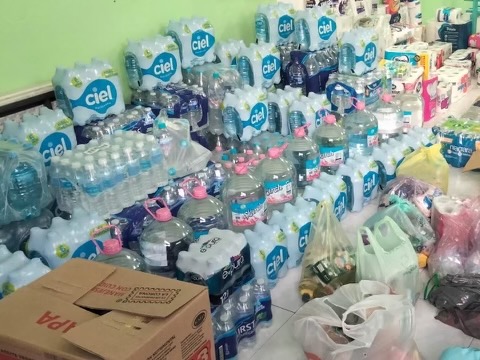
The situation in Tabasco is being described as the Katrina of Mexico. The center-city of Villahermosa is a complete disaster and as a result, those who have been forced to stay behind have nothing. The residents of Tabasco need drinkable water, powdered milk, towels, diapers, canned food, and lots of other basic items. The people of Yucatan are changing their plans to pitch in. Instead of buying food for their family, they’re buying supplies to donate as schools churches and government buildings have opened their doors to accept donations.

Specifically, the church leaders of Tabasco have asked for medical personal with medicines and vitamins to come and offer care. This is extremely important as the floodwaters begin to recede and diseases resulting from contaminated drinking water and inadequate services begin to appear. To respond to this request, God is calling on still others to change their plans. A relief corps of Christian doctors and nurses from Mérida are organizing now to travel in order to provide first-hand relief and the peace of God to those caught in the middle of this crisis. All of these health professionals are sacrificing family-time and their personal goals as they prioritize the needs of their countrymen.

I’m happy to report that my change of plans brought about some tangible results, but a need this great calls out for so much more to be done.

How about you? Do you feel God leading you to be a part of the relief effort?

Comment or email us and we’d be glad to help you with your change of plans.

Photos courtesy of: http://www.flickr.com/photos/kubricka/

Dealing with loss

Losing AgainI understand that those who frequent disciplemexico.org are not necessarily interested in baseball, much less in the outcome of the American League Divisional Series. For that reason, I’ve tried to steer clear of baseball subjects throughout the life of this site. Nevertheless, there are several out there who know that I am an avid Yankee fan, and as you can imagine the events that have happened in the course of the past week have left me feeling a bit numb.

Yes, the Yankees lost again. This time manhandled by the Cleveland Indians, a club who just last year wasn’t even sniffing the post season. This of course has had me spending some time looking for ways to deal with another October sans Yankees. You can imagine my surprise when an email from my mother-in-law helped me to put things into perspective.

An avid student of Jewish culture, she came upon a video blog from aish.com titled Isn’t losing wonderful?. In it Rabbi Yaakov Salomon comments on the loss of our beloved Yankees (and the Mets for good measure), suggesting that while “victory teaches you nothing”, “losing can teaching you everything.” He goes on exposit Proverbs 24:16:

for though a righteous man falls seven times, he rises again, but the wicked are brought down by calamity

He states that Jewish interpreters of this proverb suggest that it is not in spite of the fact that the righteous man falls seven times but it is because of the fact that he falls, and the lessons that he learns in the failures, that he rises again.

I think many of us are examples of this interpretation. I know that I, for one, rarely reflect on my victories, but the pain of failure that the sense of loss that follows drive me to determine the source of my defeat and resolve to come back stronger the next time.

So encouragement can be found in the lesson of losing. Of course, now that the Yankees have fallen seven times, I fully expect victory in 2008!

September marked for us the end of one year of ministry here in the Yucatán, and to celebrate, we brought back a best of disciplemexico.org so that you could revisit some of the highlights of our journey thus far:

Dead of the Dead Thumbnail1. Day of the Dead–Written as a response to a request of an friend, this post is by far our most popular post of the past year, and, with the celebration of this event less than a month away the hits are building again. This piece reveals the difficulty that we have as we try to understand the culture of the Yucatán and their ancient traditions.

Bicentennial Man2. Oh the Humanity!–is a piece I wrote about how God uses our humanness, something very evident to me as I suffered through a prolonged sinus infection, to reveal his perfect power.

Bike Lesson Thumbnail3. Like riding a bicycle–is a family update/reflection on what it is that we do as missionaries. By the way, mastery of the bicycle is something that our kids a