Instead of a response, silence. Instead of answers, questions. These are disappointing and often frustrating outcomes, but can they also be a means of growth? In our study of Emotionally Healthy Spirituality (EHS) and in our interactions at the World Assemblies of God Fellowship (WAGF) Missions Congress in Medellin, Colombia, we’ve discovered that, often, they can be.
123
As Pentecostals, we’re accustomed to expression, but a word spoken to God is not the only method to meet with God. In fact, there are times when God chooses silence to express his presence (1 Kings 19:11-13). In EHS, in addition to working through the content and engaging in discussion, the men of the Mexico Missionary Fellowship (MMF) are leaning into the silence, making it a daily discipline to turn off the noise and so facilitating growth through an alternative experience with God.Â
At the WAGF Missions Congress, we joined with hundreds of delegates from around the world who gathered to mobilize to see the worldwide Assemblies of God movement surpass the 1 million church mark by 2033, the two-thousandth anniversary of the Church. It was an exciting time. However, during the workshop led by missionary, Ed Nye, that Dave translated, we were also confronted by a sobering reality: our normal ways of planting the church are largely ineffective among the 3.2 billion unreached, who are increasingly put off or put at risk by traditional forms of evangelism.Â
The temptation is to look for easy answers to our problem, ready-made methods that can generate quick results. Often, though, the answers that we provide are answers to questions that no one is asking. Ed Nye suggested that sometimes the unreached remain so not because we are lacking answers but because we are not asking the right questions.
Silence. Questions. Perhaps they’re not what we want but exactly what we need to see both personal and corporate growth. Thanks for your support, which gives us the opportunity to lead others into these frustrating but often productive experiences.
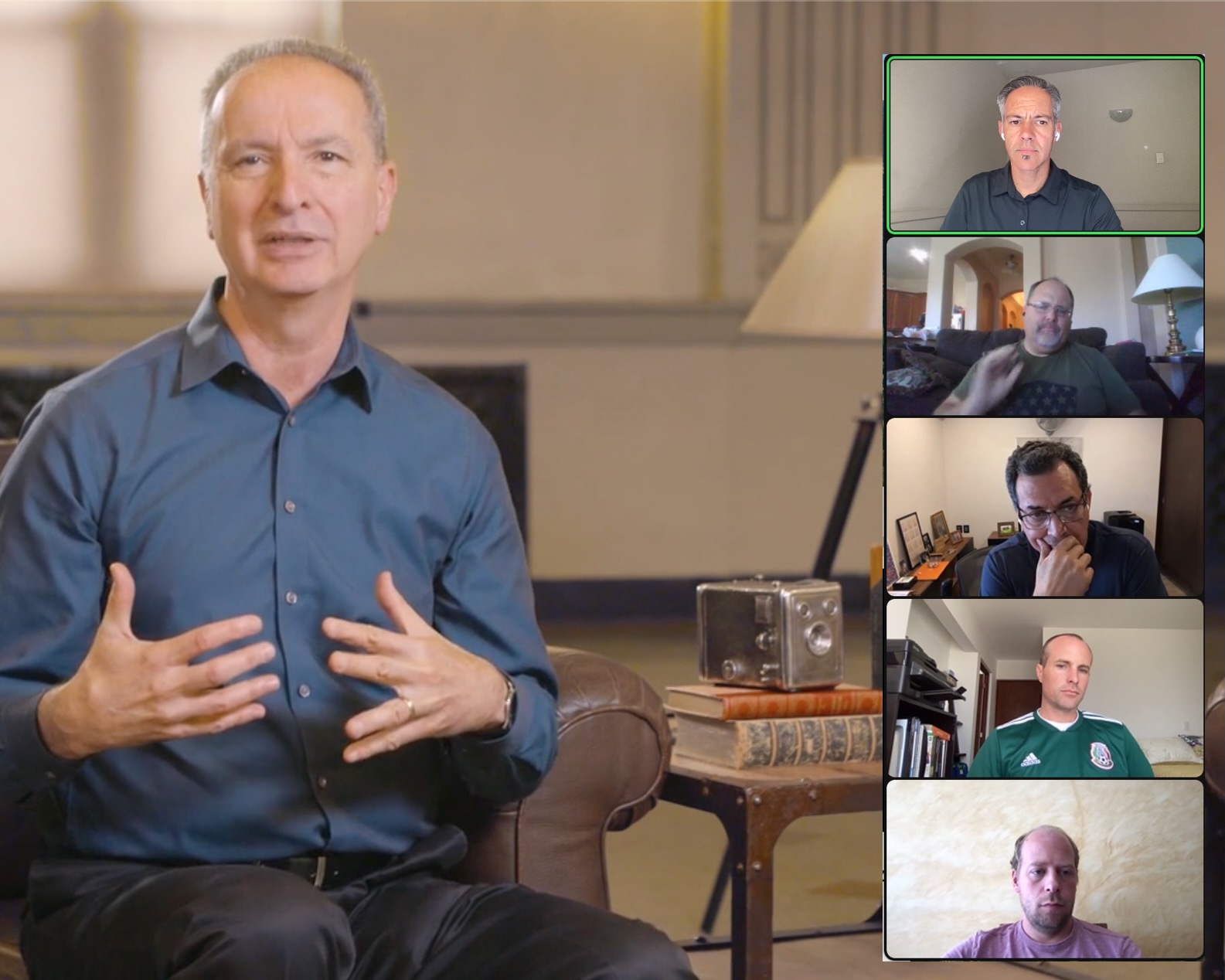
Dave is facilitating the Emotionally Healthy Spirituality program for the men of the MMF.
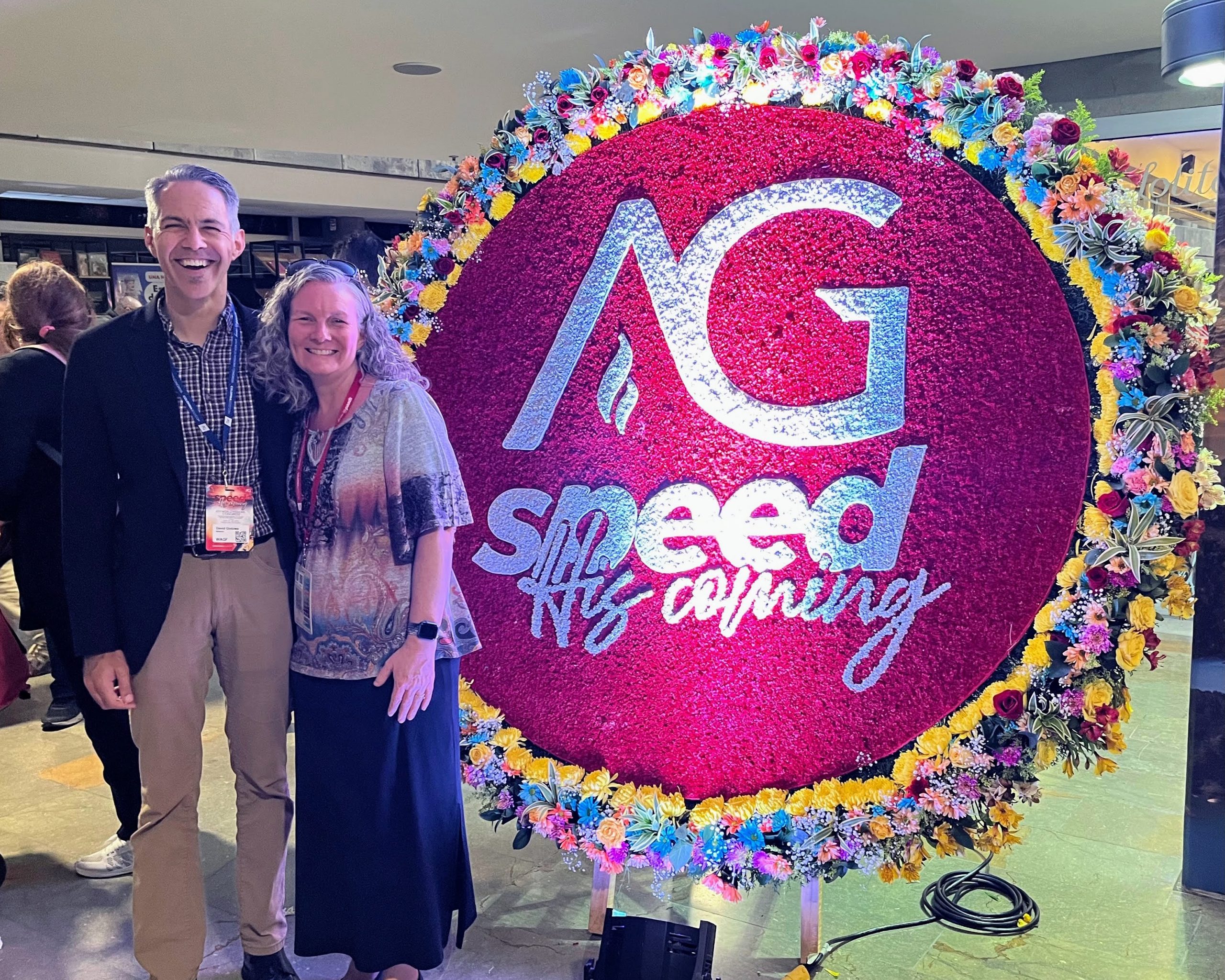
We were on hand to participate in the 6th WAGF Missions Congress in Medellin, Colombia.
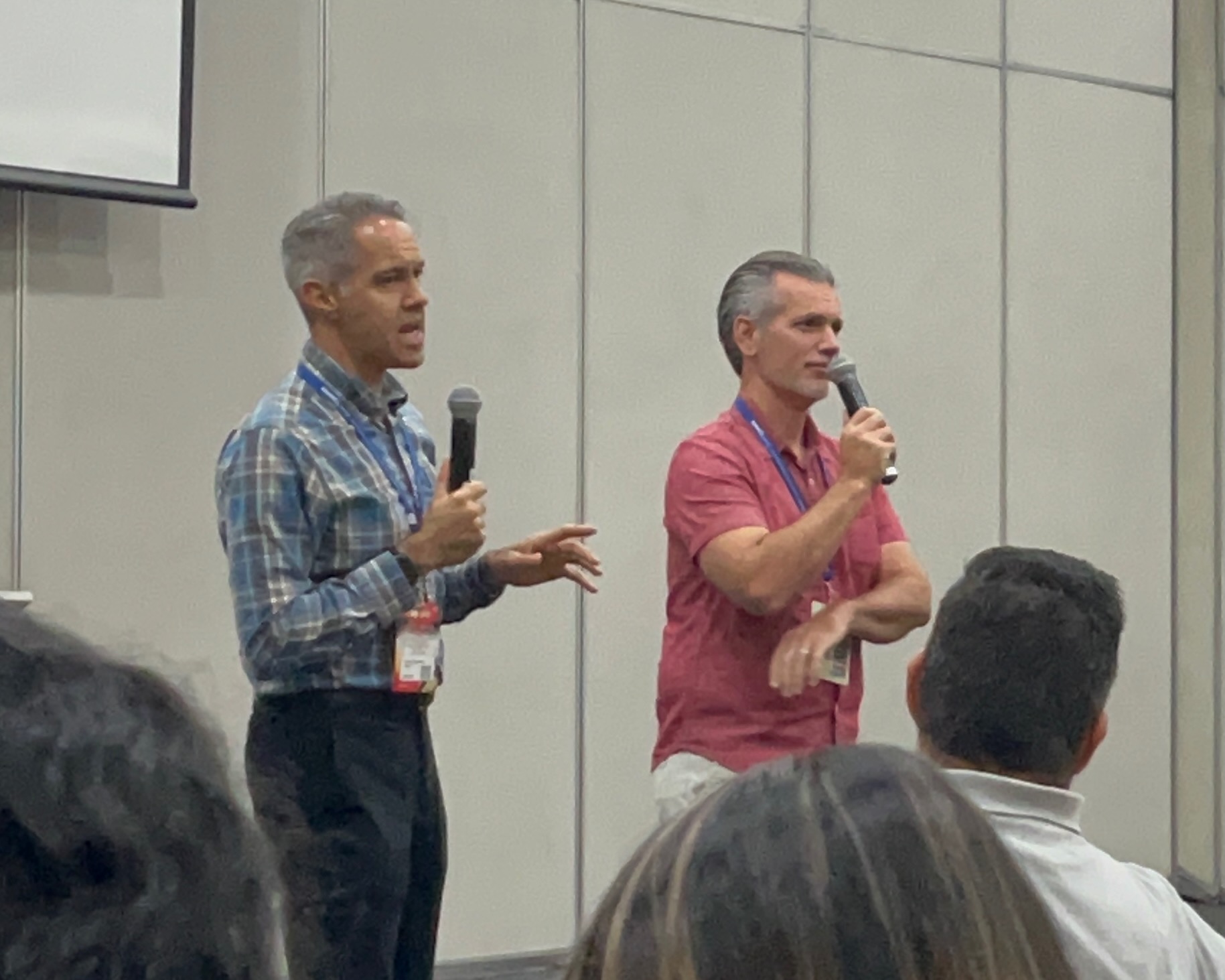
At the congress, Dave translated for Ed Nye in his workshop about reaching the unreached.Â
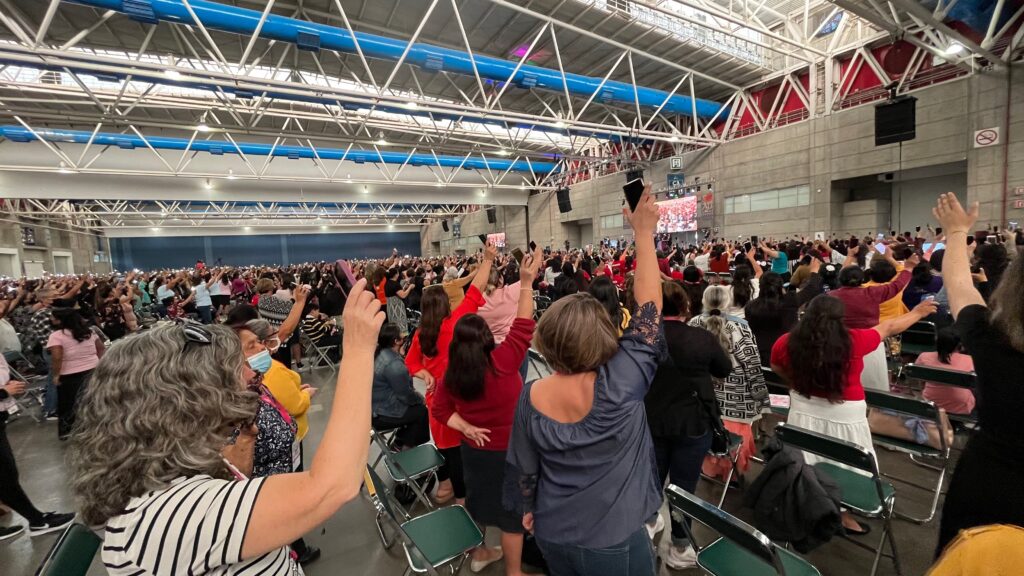
With the relaxing of pandemic protocols, we’ve been able to increase our travel and engagement with both the national church and the missionaries that we serve. Following our prayer retreat with the Latin America Caribbean (LAC) Leadership Team, we hit the road in our Speed the Light vehicle to Leon, Guanajuato, the setting of last year’s General Council, to attend the National Women’s Conference. There, Kelly joined the group of 6,000 ladies from across Mexico that was inspired and equipped during the three-day event (first photo). We were also able to appreciate the creativity of fellow missionary, Angela Hogan, who designed and coordinated the creation of the traditional cross-stitch scenery pieces for the event.
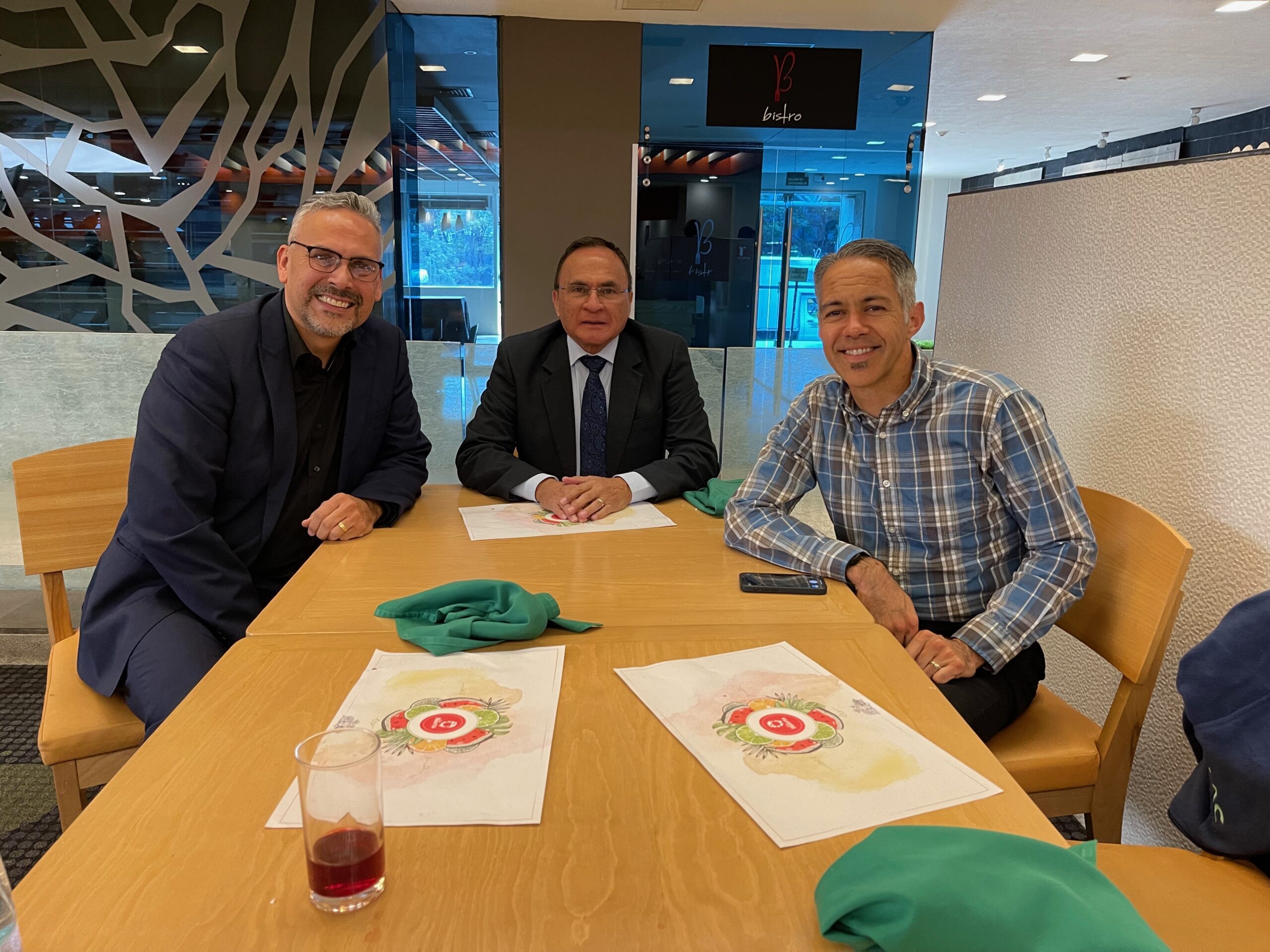
Closer to home, in Mexico City, we’ve found how our proximity to the national offices has given us the opportunity to cultivate key relationships. During the Executive Presbytery meetings in early February, Dave was able to meet with the newly elected national missions director, Abiud Montoya, and secretary, Honorio Andrade (last photo), to discuss ways in which we can help them to develop their department and increase their impact both nationally, amongunreached people groups, and internationally.
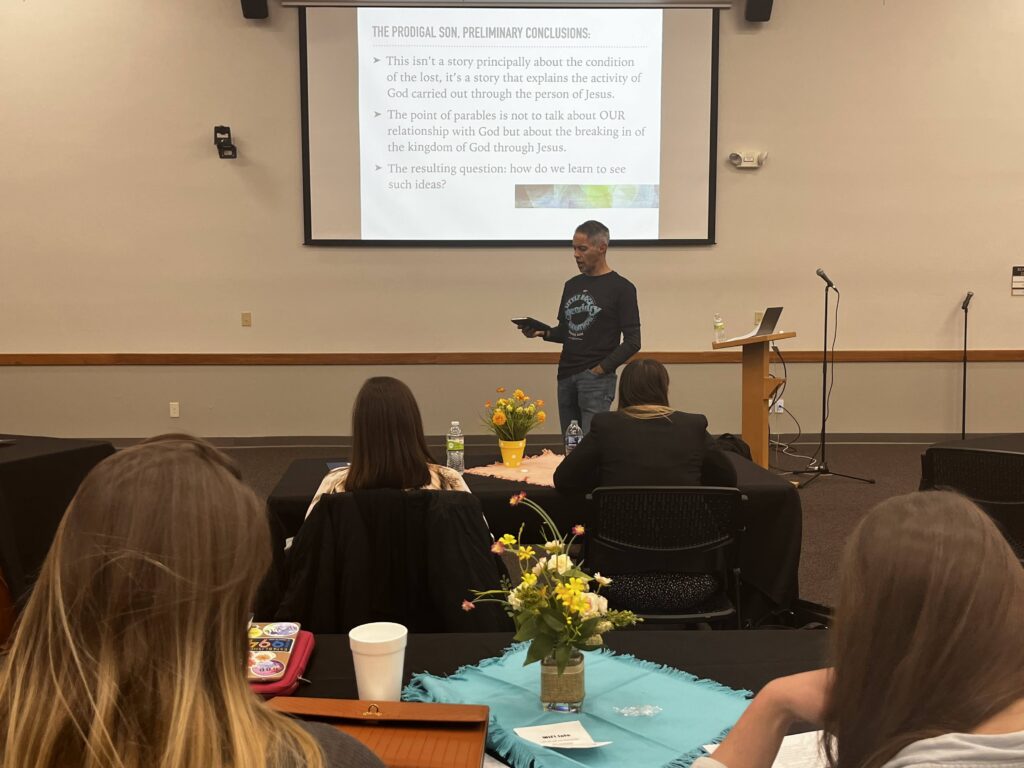
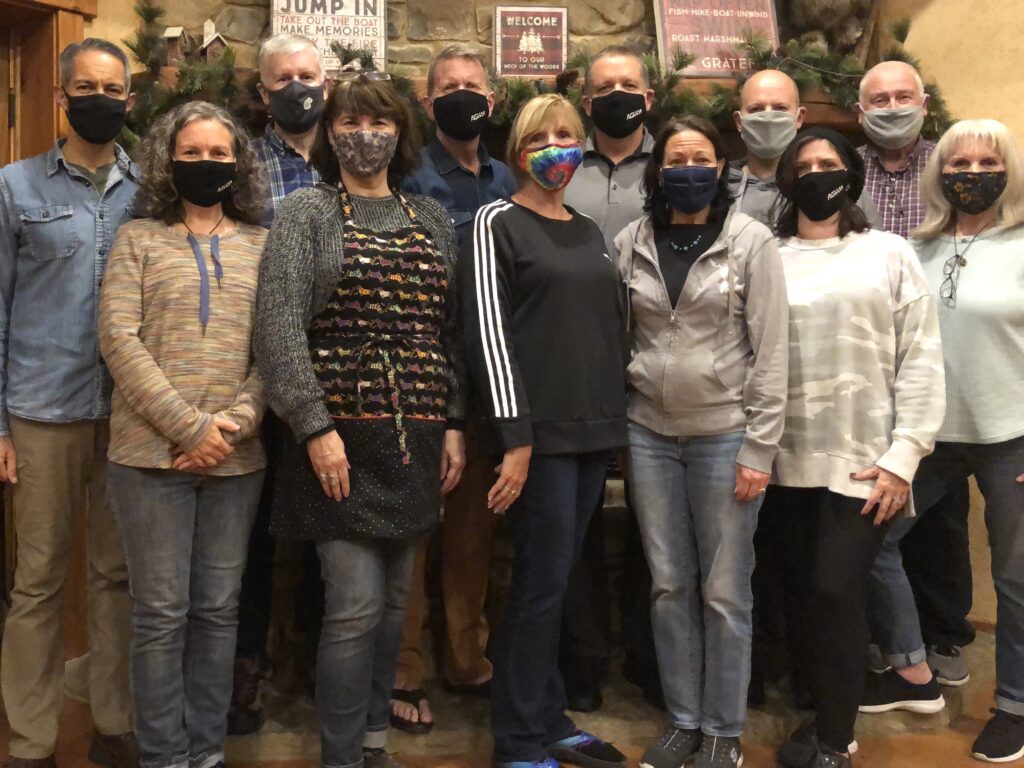
Among the missionary body, we’ve begun a focus on soul care, and Kelly has been leading several of the ladies of the Mexico Missionary Fellowship (MMF) through the Emotionally Healthy Spirituality Course (EHS). EHS is designed to promote holistic transformation in areas that are sometimes neglected in traditional discipleship programs, and the women of the MMF are enjoying the meaningful ministry in their own lives and the access to the tools they’ll be able to share with others. Dave also joined the LAC training team to teach the Bible in Ministry competency during candidate orientation in Springfield, MO, March 5th-11th (middle photo).
Sitting on my desk is a prayer map of the Latin America Caribbean Region. On that map is this quote from Loren Triplett, former Executive Director of Assemblies of God World Missions:
“We dare not measure our success against anything but the unfinished task.”
This is a sober reminder to keep the Great Commission in view, to go into all the world and make disciples. In a world full of distraction, Loren Triplett’s words help us maintain our focus.
But how do we measure the unfinished task? Every ten years, the National Institute of Statistics and Geography (INEGI) takes a census to determine the number and distribution of the population of Mexico as well as its main demographic, socioeconomic, and cultural characteristics, including religious affiliation. When they published their findings on January 25, 2021, we had the data that we needed to make our measurement.
According to those figures, the population grew 12.18% between the years 2010 and 2020 from 112.3 million to just over 126 million. During that same time, those who identify as Christians or evangelicals grew 46.82% from 8.2 million to just over 12 million. That’s great news!
However, although we can say that we’ve made progress on the unfinished task there is still an enormous work to be done. At the same time, while evangelicalism has grown, secularism has exploded. During the 2010-2020 period, those claiming no religion or no religious affiliation grew 336.18% from 3 million to 13.1 million.
What then is our response? We prioritize the Great Commission, committing ourselves to the proclamation of the gospel through word and deed (Rom 10:13-14). We then participate with others who share our commitment (1 Peter 4:10). But, most of all, we pray, asking the Lord to call others to join us in our efforts (Luke 10:2).
As Area Directors, we’re encouraged by the way our missionary colleagues, understanding the holistic nature of the good news that we share, have pivoted during this pandemic, shifting ministry to respond to the need. We’re privileged as well to work with national partners who, although facing tremendous hardship themselves, continue to share the hope of the gospel. And we’re humbled by the movement of prayer that is growing up around us as believers cry out to God to call more workers to reach the lost*.
Coming full circle, then, while we are encouraged by the robust growth of the evangelical church in the last decade, when faced with the 114 million in Mexico who have yet to trust in Jesus, we stop short of congratulating ourselves. Instead, we redouble our efforts in the fulfillment of the Great Commission, prioritizing, participating, and praying so that, one day, we’ll be able to celebrate the completion of the unfinished task.
*Will you join us in prayer for more workers?
Text “xapray” to 313131 and set a daily reminder for 10:02 AM/PM to be a part of this intercessory movement!
Very truly I tell you, when you were younger you dressed yourself and went where you wanted; but when you are old you will stretch out your hands, and someone else will dress you and lead you where you do not want to go.” … Then he said to him, “Follow me!” –John 21:18-19
Prior to our quarantine, our regional leadership team met in-person for the first time in over a year. It was a much-needed gathering of prayer and planning.
I’m writing this update from our second quarantine cycle, this time because of a positive test for the coronavirus within our household. Jonathan, our youngest, was complaining of some symptoms on Monday morning. We had thought then that it was just a 24-hour bug, but, when the results came back, he was positive for COVID-19. Because of the result, we’ll be housebound until the 16th.
This return to confinement is frustrating. Kelly and I hadn’t been infected last month at our first in-person leadership meetings in a year (photo). We hadn’t become ill as a result of any of our missions services. It was our high schooler, attending classes only two days a week, sitting at a six-foot distance and masked that was sickened and, for that reason, we’re back where we were in March, watching our plans being altered against our will.
After such a frustration it’s easy to call “foul,” to look at others’ situations and complain that it’s not fair. That’s precisely where this month’s scripture comes in. Here, in John 21, Jesus reveals to Peter the fact that he will suffer and die as Jesus did. Peter’s immediate response to Jesus was to compare. He looked to John and asked, “What about him?”, but Jesus dismissed the question. His command was not to seek out the best circumstances–it was, rather, “Follow me!”
As this pandemic began we reassured ourselves that we were in this together, but as this crisis has persisted, we’ve seen how divided we are. We’ve observed how some have had their fortunes increase while others, like our friends in Mexico’s southeast, have dealt not only with disease but also disaster as four named storms have struck the Yucatan Peninsula. Is it frustrating? Yes. Could we say it’s unfair? Yes. Nevertheless, the command to all of us, rich or poor, US or Mexican, remains the same, “Follow me.”
And so we follow, loving God and others, although we’re housebound. We respond with compassion, coordinating relief and reconstruction efforts, although we must do it remotely. At the same time, we thank you for your participation and we encourage you, despite your situation, to hear and respond to Jesus’s command, “Follow me!”
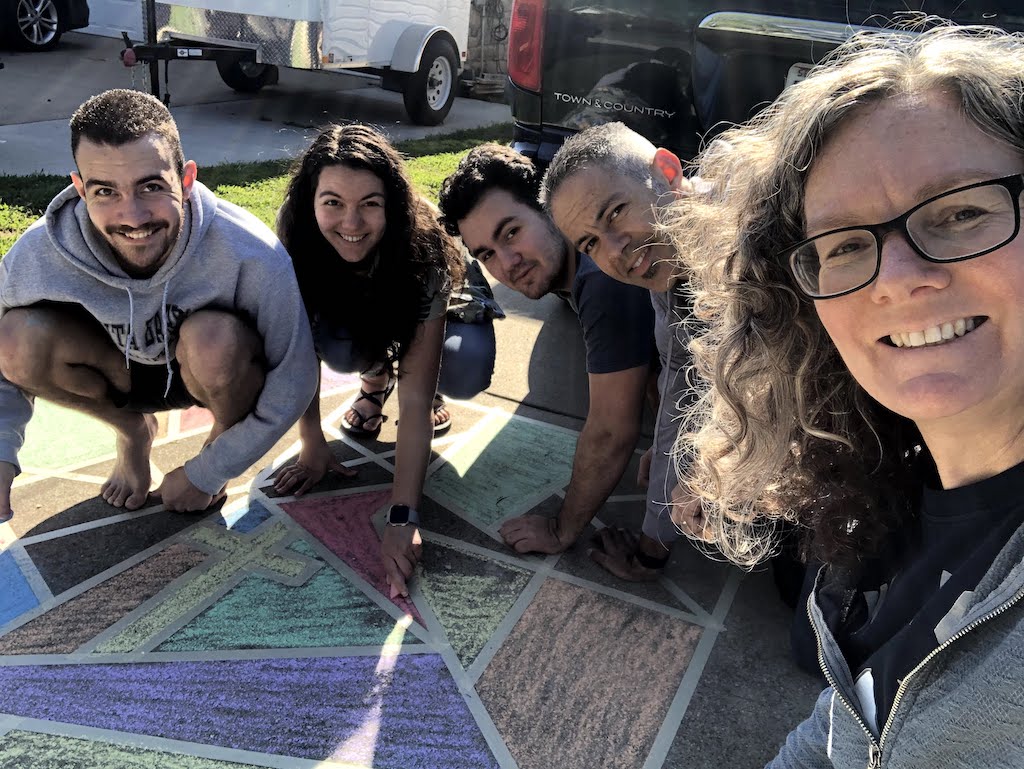
Some Holy Week sidewalk art has been one way that we’ve sought to reframe our unplanned family togetherness.
Encouraged by a webinar led by Michael Hyatt, I released a video to our team of missionaries assigned to Mexico at the start of the coronavirus pandemic. My intention as I recorded the video was to help my colleagues both process their emotions and to be productive even as so much around us was closing down. As we’ve continued through the days and weeks of social distancing, I’ve felt that the message that I shared with them would be worth sharing with a wider audience, even as many look forward to returning to some sense of normalcy.
Those steps to process our emotions and stay productive at home are the following:
Lament
Lean and
Lead
Lament In our future-minded society, many of us feel that it may be unspiritual to mourn over the situation, or, if we choose to face reality, we somehow grant it power over us, but that doesn’t seem to be the biblical pattern. Psalm‬ â€42:4‬ â€says, “My heart is breaking as I remember how it used to be: I walked among the crowds of worshipers, leading a great procession to the house of God, singing for joy and giving thanks amid the sound of a great celebration!”
The reality is that this crisis has taken something from all of us. Kelly and I were looking forward to making some memories with our kids who were on Spring Break when we were notified that we had to go into self-imposed quarantine. We had tickets to Europe. We were just $150 from finishing our monthly support. All of those plans and goals have been shifted dramatically. What we expected to be moments of joy turned to spasms of anxiety, assessing ourselves for the dreaded symptoms and concerned for those that we could not reach. Of course, what we’ve faced as a family is light in comparison to so many others who have lost income, work, businesses, and even loved ones because of this virus. Allow yourself to grieve over what’s been lost.
And don’t expect the grieving to be over after one good cry. I’ve been surprised as sadness has become at times particularly acute. One such instance came during Central Assembly’s Good Friday Service. From our TV, we saw images of a darkened sanctuary and an empty stage. An unseen choir sang accompanied by piano and violin while the camera panned the empty places where they would have stood. Inactive instruments seemed to memorialize the musicians who would have been playing. I cried as I wondered, “can we ever go back?”
Lean Still, even as we may be tempted to allow the grief to simply wash over us, we need to understand that we must rise up again. While we take time to lament, we must also learn to lean. The same psalm states: “Why am I discouraged? Why is my heart so sad? I will put my hope in God! I will praise him again– my Savior and my God! Now I am deeply discouraged, but I will remember you. I routinely pray the words of Proverbs 3:5 and 6 “Trust in the Lord with all your heart, And lean not on your own understanding; In all your ways acknowledge Him, And He shall direct your paths.” We may see things as bleak, but we cannot allow our limited perspective to determine our reaction. We must lean on the Lord. Trust in God, knowing that he is in control and that he will guide us through this crisis. He will take us through this storm and bring us into a place of peace.
Lead So while we’ve allowed ourselves to lament and we’ve determined to lean, we must also step up to lead. With so much at stake and so little clear direction, it’s easy to find ourselves frozen with fear, allowing the news to overwhelm us, but inactivity is not an option. We must learn to be proactive in our approach, doing what we can where we can.
Stephen Covey can help us with this task. In this book, the 7 Habits of Highly Effective People, he talks about 3 concentric circles that occupy our thoughts and actions:
the circle of concern
the circle of influence and
the circle of control.
Right now, we’re concerned about the world and those affected by the virus, we’re concerned about the economy and the effect it will have on our retirement, our work or ministry, and even the ability to meet our day-to-day responsibilities. However, there is little to nothing that we can do to affect change in that circle. Staying there produces little but worry.
Where we can begin to have an effect is within our circle of influence. In this circle are our coworkers and colleagues, our friends and families. There, we can affect change through interactions of love and genuine concern, but we can do little even here until we operate in our circle of control, that is, until we become aware of ourselves and align our lives with the values that we hold: loving God and loving others. In other words, our prime influence or leadership is that of modeling. In that, we take care to maintain our spiritual hygiene: prayer, study, and meditation on the word, worship, fasting, etc. If we’ve relegated our relationship with God to our church calendar, chances are we need to brush up on these areas. Let’s take the time necessary to get our heart in the right place with Him.
At the same time, we take care to model best practices when it comes to staying healthy: using masks in public and keeping our physical distance from people, staying at home to reduce the infection rate and washing our hands regularly. In addition, let’s not forget physical exercise and adequate rest, always good ideas no matter the threat we may be facing.
Then, as we do reach out, I feel that we should be focusing on the three things that we can give to those who are in our circle of influence:Â
Equilibrium
Encouragement
Empowerment
The first gift, equilibrium, is the most urgent and perhaps the easiest to give. Here, we’re providing the stability many need as their sources of income and circles of support have been disrupted. If they are sick, we’re helping facilitate their care. If they are hungry, we’re arranging a grocery delivery. If they are anxious or lonely, we’re the listening ear. Certainly, there are many ways that we can help to support our friends, neighbors, coworkers, and acquaintances in this time of crisis. Some require our time, others, our money, but all require our thought and consideration. Let’s determine to be a blessing even as many of us have been blessed in our times of need.
The second gift, encouragement, is a bit more of a stretch. This requires us to step back and imagine what life might be like after this crisis passes. How will our daily lives look in this new normal, and how can we prepare ourselves to thrive in that reality? We’re painting for ourselves and others the picture of that future with the goal of embracing it. Certainly, there will be challenges but what about the opportunities? Yes, there will be routines that we will miss but what about the new experiences to embrace? Let’s make an effort here to help ourselves and those around us to begin to transition.
The final gift is empowerment. In business, this is the decentralization of the administration. In the church, this is the revitalization of the priesthood of all believers. This is the bestowing of the authority and the resources necessary to help our community make the transition to the new reality. This gift is becoming more important by the day. While I don’t believe that large corporations or professional ministry are going anywhere, if what we have after the pandemic is what we had before, we’ve missed out on a huge opportunity. Why couldn’t we use this time to push decision making closer to the people who are affected by those decisions? Why couldn’t we leverage this opportunity to equip our volunteers to not only caretake but truly care for those in their ministries? This can happen in units as small as the family and as large as the multi-site megachurch. The coronavirus is rewriting the future of the way we live, work, and associate, why not have a hand in editing that future?
I imagine that, even as we saw this virus take hold in China, none of us thought that, here in the US, we’d be facing a crisis of this magnitude. Still, I think that as we give ourselves room to lament, as we learn to lean on the Lord, and as we step up to lead, first ourselves and then those in our circles of influence, we can not only survive but also thrive in this crisis. Know that Kelly and I are praying for you and are available to you via email, text, or phone call. We hope that you’ll be there for one another as we continue through this situation.
When Jay Dickerson, Area Director for Central America and Coordinator for Missionary Formation, asked me (Dave) if I’d be interested in teaching the "Bible as Narrative" competency for new missionary candidates during their orientation sessions this month, it didn’t take long for me to give him my enthusiastic affirmative response. As missionaries in the Yucatan, we were passionate about facilitating encounters with the Bible. We know that as individuals understand the Bible story and see themselves within the framework of its redemptive history, their way of perceiving reality or worldview is changed. That change makes possible their increased participation with God in that same redemption. What an honor it was to walk through the Bible with these new missionaries, giving them the tools they need to see that change happen in themselves and lead others to experience it as well. As Mexico Area Directors we look forward to additional opportunities to influence the next generation of missionaries.
But this month we also had the chance to influence the next generation of missions supporters as we were invited to speak to the children in Lebanon First Assembly (Lebanon, MO) and Northland Cathedral (Kansas City, MO) about how Boys and Girls’ Missionary Challenge (BGMC) helps missionaries reach people throughout the world. After grabbing their attention with our snake (Don’t worry, it’s not real.), we talked to them about how missionaries use BGMC funds that they give each week to help men and women and boys and girls all over the world know Jesus.
Thank you for your prayers and support that are enabling us to extend our influence. We appreciate your involvement in our team!
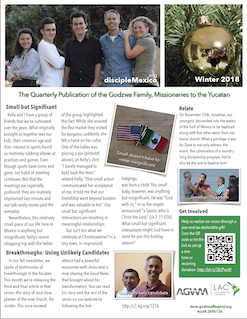
It may have been a simple shopping trip, but it’s shown us that our small but significant interactions are resulting in meaningful relationships. Interested in reading about it? Hit the link here, or click on the picture. While you’re there, don’t miss
Our latest installment in the Breakthrough Series,
a major milestone for the youngest member of the family,
And an opportunity to be a part of fulfilling our vision through your year-end tax-deductible giving.
Our online newsletter is viewable as a PDF document. If you do not have the Adobe Acrobat Reader software installed, you may download it here.
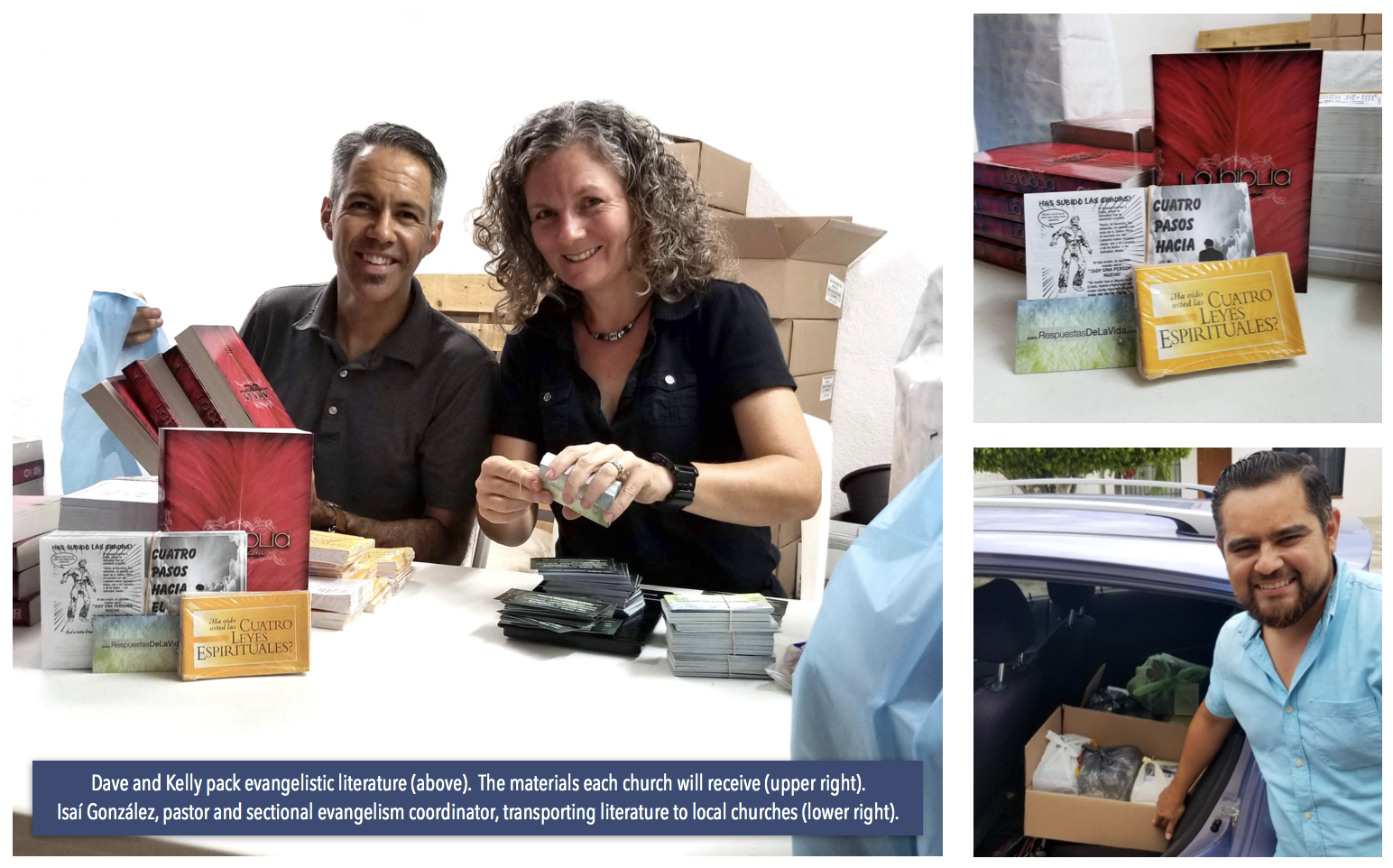
In our April update, we took time to highlight the ministry of Light for the Lost. Through their support, we were able to furnish all of our church planters with the evangelism materials that they needed to effectively present the gospel to the unsaved in the neighborhoods, towns, and villages where they are starting new works. In this July report, we’re excited to update that story as we’ve been able to extend that support to churches throughout the district of Yucatán.
Leading the District Evangelism Department since July of last year, we’ve been promoting the idea that the local church is the engine that drives evangelism. It is therefore a pleasure to support these pastors and congregations, utilizing our network to distribute some 68,000 tracts and 600 Bibles in support of their evangelistic efforts. We’re convinced that through their desire to reach the lost and the use of these tools, their outreaches will leave a lasting impact.
We are also providing churches with a particularly exciting tool: Respuestas De La Vida (Journey Answers) cards. Designed to follow up gospel conversations or be left with restaurant servers, gas station attendants, taxi drivers, etc., these cards lead the lost to an online, relevant gospel presentation and a site where they can respond with questions, prayer requests, or make a decision for Christ. These respondents can then be directed to any one of our local congregations for continued discipleship. Our hope is that this mass distribution will lead many to respond to the gospel and connect with a church home.
Of course, this kind of operation does create its share of complications. Our spare bedroom has since turned into a warehouse/staging center as we prepare evangelism packets for distribution! Still, it’s a small price to pay for the opportunity to take another step toward fulfilling the vision of the Yucatan full of churches.
Pray with us, then, that these messages will reach their intended audience and influence them to become disciples of Christ. And, as you do pray, would you please add these additional needs to your list?
We’ve paused our consideration of the Disciplines for a time, in part because of an increased experience of the Discipline of Service to my boys while Kelly was away in Oaxaca (You can read about that experience in our most recent newsletterPDF.), and in part because of the frenetic pace that accompanies the final weeks before Christmas vacation. Still, though our forward progress has been slowed, the practice of the disciplines considered, especially those of prayer, study, solitude, service, and submission have been constant companions, a means to orient my life toward the grace that, I have become increasingly aware, God longs to lavish on each one of his children.
However, as I traveled to ACLAME meetings in Springfield, MO. My need to switch to airplane mode to disconnect with the Internet and all of the urgency and distraction that it generates, became another opportunity for me to connect with the Disciplines and, with them, the God who has so generously provided them as a means to align us with his divine nature. Today we move forward into the Discipline of Worship.
While, as with the other Disciplines, I’ll look to define the Discipline of Worship and seek to record my personal experience with it, I felt the need to stop at a declaration of the author, Richard Foster: “God is actively seeking worshipers.” Jesus declares, “The true worshipers will worship the Father in spirit and truth, for such the Father seeks to worship him” (John 4:23, [italics added]).” When I’ve read this scripture in the past I’ve always pictured God as waiting for those who would worship him in “spirit and in truth,” as though it was something to be found within us, something which we would generate from ourselves as we applied the right songs, the right postures, or the right words to convey that spiritual worship. But Foster goes on to talk about the God who seeks, looks for, and evokes reaction from those with whom he interacts.
He provides a list of examples: God looking for Adam in the garden, Jesus, drawing all humanity to himself on the cross, the Father running to the prodigal. Each one shows us a God who initiates the worship that he seeks from his children, who shows himself to them, who gives them every reason to exult in praise and adoration. And so we turn to the Discipline of Worship with a new understanding: even as the Scriptures call for a sacrifice of praise, we recognize that it is God who grants us the reasons and the resources that we need to present to him that sacrifice that he requests.
Like the father who receives with gratitude the gift that his child has purchased for him although the money for that gift came from the father’s own pocket, such is the expectation and subsequent joy of our Heavenly Father when we respond in worship although, in fact, it is a worship that he himself has made possible. May we then enter into to this Discipline knowing that we have divine aid ensuring our success. What a Good, Good Father he is indeed!
Before we go on in our study, let’s talk about this idea
What’s your take on John 4:23?
As we close out this year of 2018, can you remember instances when God has sought you out to worship him? Share it with us.
For the past two months we’ve been walking through an experiential study of the Spiritual Disciplines as laid out in Richard Foster’s book, Celebration of Discipline. This week, we’re going through the Corporate Discipline of Confession. If you’ve missed my introductory post on this topic, I encourage you to go back and review it.
As we turn from its justification to its practice, I felt it helpful to use Foster’s “Diary of a Confession” section as a guide. During the past three days in which I’ve been silent in this space, I’ve been preparing, selecting setting up and appointment with my confessor and spending time in reflection, in the evaluation my past as I prepare to give my own confession.
The reflection consisted of dividing my life, as did Foster into three sections. In my case I chose adolescence, young adulthood, and adulthood as my sections, effectively separating my life into my post conversion experience, my time of ministerial formation, and my life as a minister. I then spent time in focused meditation over the course of three days allowing the Holy Spirit to reveal the past sins that came to the fore. My goal was not to explain or justify those memories, simply to write them down as I that which I believed necessary for me to share in the upcoming session.
Of course, the benefits that I’ve already received from this time of preparation led me to reflect on why I hadn’t taken the initiative to go through this process before or why I had never received an invitation to do so from the Christian communities of which I’d been a part. My search for reasons brought me to an article on CovenantEyes.com, the website of company that produces the accountability software that we use on our electronic devices.
In the article entitled, “Shame-Killing Churches: A Vision of Real Accountability” the author, Traylor Lovvorn, explains why so few Christian communities are able to operate at the level of the trasnformative community that it should be. He cites a Dr. David Powlison when talking about the problem of shame:
Shame [is] “a sense of failure before the eyes of someone else.” When this “someone else” is a perfect and holy Creator and our perspective is vertical in nature, this sense of failure is healthy in that it opens the door to the Gospel and allows us to see our desperate need for a Savior. But when our perspective is horizontal and we are comparing ourselves to peers and fellow believers, shame turns toxic and leads to a deep-seated unease with who we are that causes us to withdraw and hide.
Any attempts to establish community and accountability that do not account for and address this underlying issue of toxic shame only piles on a deeper sense of failure and drives men further into isolation and away from genuine community.
I invite you to read the rest of the article for his description of, what to me is, a far too common problem in our Christian community. Although his struggle was related to the sexual, I believe that his experience is a specific experience of an all too universal problem.
How do we escape this isolationism, the popular cliché that our private, hidden, relationship with Jesus is enough? I feel even more strongly now that it is by becoming vulnerable through confession. It’s by breaking down the facade that we’ve worn before others and showing them the radical nature of the redemptive work, a work that continues to the present day in every believer, and it’s by offering grace for those who are walking that same road with us.
As I write this, I’m readying for my own scheduled time of confession. To tell the truth, the preparation has already had a profound effect. Nevertheless, I’m looking forward to living out the experience. After these last two posts, I hope you might be as well.
We use cookies to optimize our website and our service.
Functional cookies
Always active
The technical storage or access is strictly necessary for the legitimate purpose of enabling the use of a specific service explicitly requested by the subscriber or user, or for the sole purpose of carrying out the transmission of a communication over an electronic communications network.
Preferences
The technical storage or access is necessary for the legitimate purpose of storing preferences that are not requested by the subscriber or user.
Statistics
The technical storage or access that is used exclusively for statistical purposes.The technical storage or access that is used exclusively for anonymous statistical purposes. Without a subpoena, voluntary compliance on the part of your Internet Service Provider, or additional records from a third party, information stored or retrieved for this purpose alone cannot usually be used to identify you.
Marketing
The technical storage or access is required to create user profiles to send advertising, or to track the user on a website or across several websites for similar marketing purposes.




 But this month we also had the chance to influence the next generation of missions supporters as we were invited to speak to the children in Lebanon First Assembly (Lebanon, MO) and Northland Cathedral (Kansas City, MO) about how Boys and Girls’ Missionary Challenge (BGMC) helps missionaries reach people throughout the world. After grabbing their attention with our snake (Don’t worry, it’s not real.), we talked to them about how missionaries use BGMC funds that they give each week to help men and women and boys and girls all over the world know Jesus.