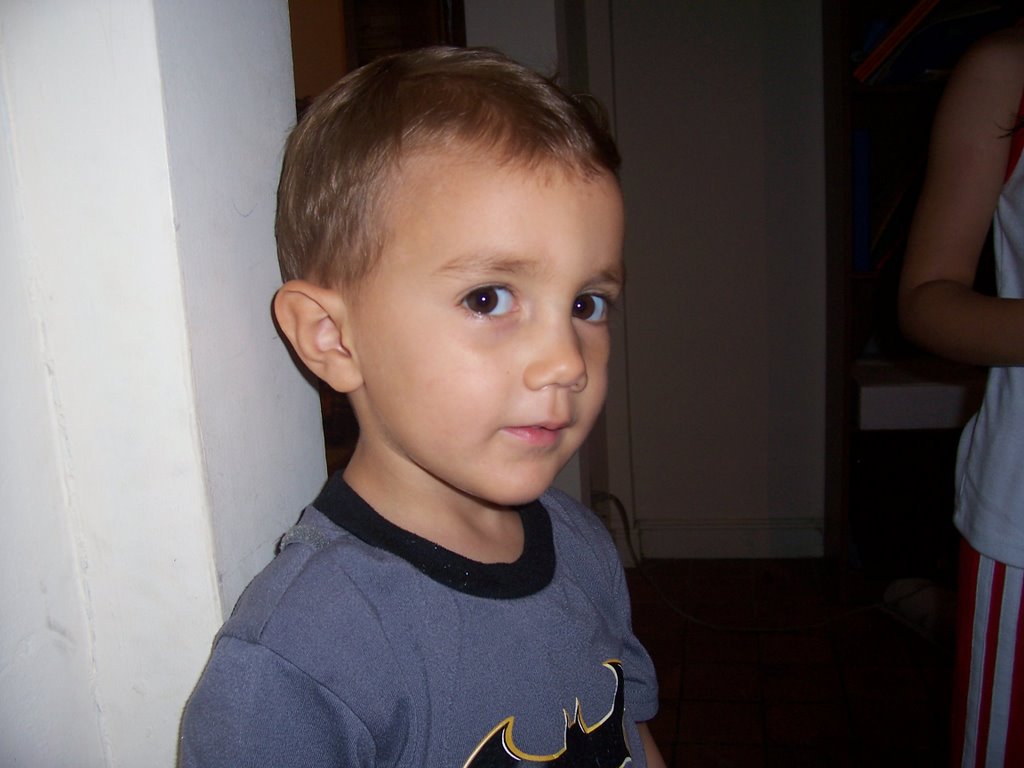
 Keeping with our theme of lasts, we’d appreciate your prayers today (Friday) as we go through our “final exam” here at CINCEL. Kelly and I will each be sitting down with a professor for a “conversation” of sorts in order to plot our oral proficiency in Spanish. That’s the reason for the photo of Joseph’s mouth above. Please pray that we will be able to put into practice all that we have learned in the past year, and that the results of this exam will be an encouragement for the both of us to continue our learning even after we graduate from our program.
You are currently browsing Dave’s articles.
100 posts that is! We’ve crossed the 100 barrier, and to celebrate, we’ve changed our look. We’ve got what we believe is a much cleaner, much less “out of the box” look with more emphasis on Mexico, especially on the area of Merida where we are going to work. Of course, all of the features and content that you have enjoyed are still around. So if you’ve been enjoying our RSS feed or our updates by email, maybe it’s time to stop on by and give us another glance. By the way, thanks for your support and thanks for making us one of your stops on the web.
Technorati Tags: Site-Changes
 When we arrived in Costa Rica last August, one year seemed to be such a long time. We had images in our mind of how we would become almost natives, learning the language perfectly, and knowing every corner of this country. On the contrary, we have found that one year is only adequate to get your feet wet in the culture of a country. At no time is this more clear than when you begin to say goodbye.
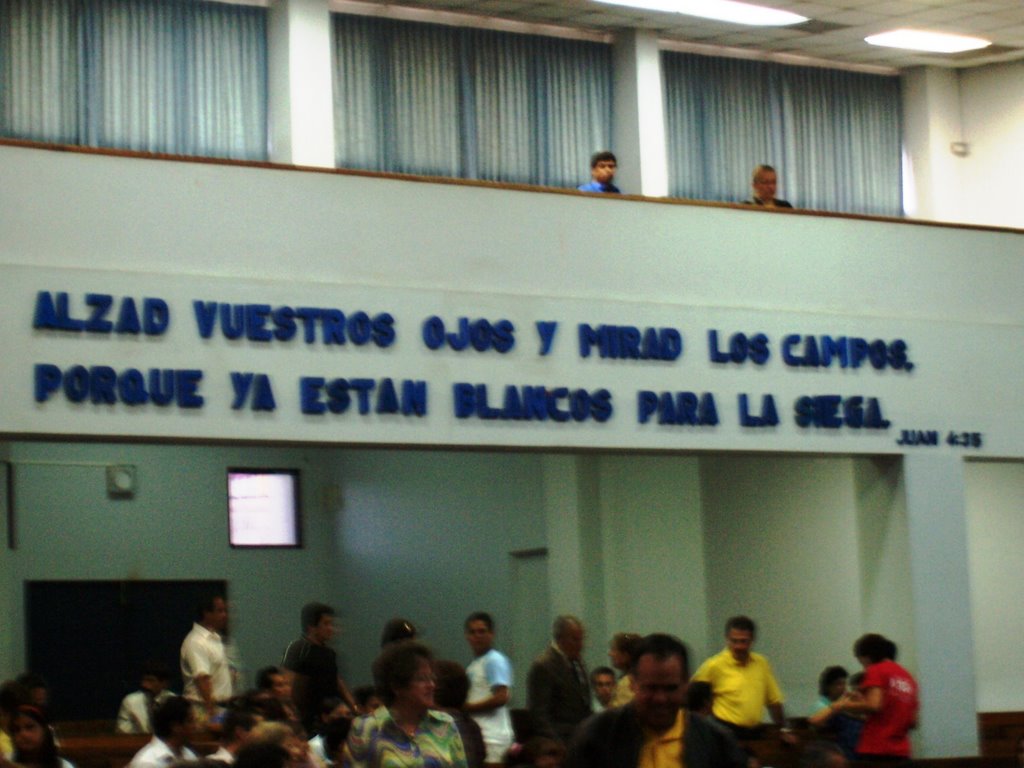
This past Sunday, we said our first goodbye to our “home” church during the time that we have lived in Costa Rica. It is the place that we first learned to worship God in Spanish, and it has also been a place where we have felt God move in significant ways. This is a picture of the back wall of the church called Centro Evangelistico. The Bible verse in Spanish, although maybe a bit difficult to make out, was a confirmation of the hand of God on our lives when we arrived. It reads “Lift up your eyes and look to the fields because they are white for the harvest –John 4:35”
As we were itinerating last year, I had felt in April that God had given me this verse in order to encourage us to reach the field as soon as possible. Thankfully, many individuals and churches responded to help us reach our budget goal and leave on time. When we arrived at the church Centro Evangelistico, we received this confirmation that we were on schedule. Now as we depart, I feel that this verse is sending us out. Telling us that now is the time to put our hands to the work.
And so, as we begin to wrap up our time here, we look toward the near future which includes packing, planning, and preparing ourselves mentally and spiritually, but we also look back, remembering the hand of God upon us here and the relationships built, and how each has affected us greatly.
 As language school students for the past year, we’ve had the benefit of taking a lot from the people around us. We’ve received 4 hours a day of lessons, we’ve stopped people along the street, in shopping malls, and in church in order to have conversations, and we’ve received advice and insight into the latin culture, but we’ve not often had the opportunity to give back. That’s why, when we have the opportunity to contribute, we feel that it is blogworthy.
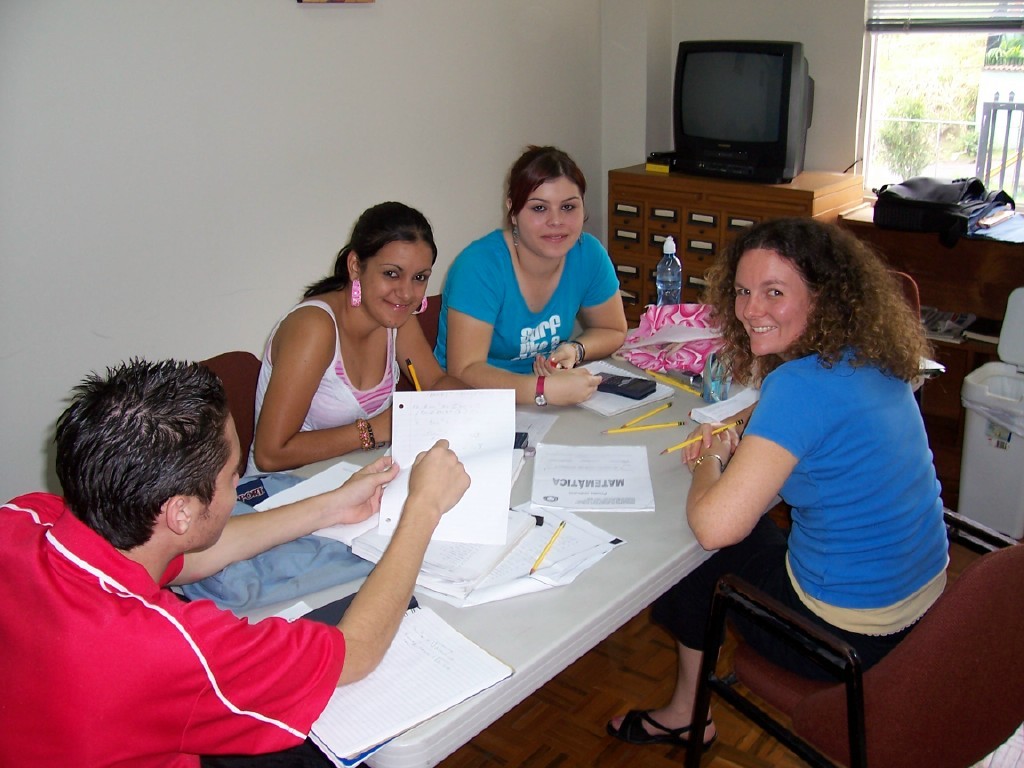 This month Kelly headed up a program at CINCEL to help seniors in high school (colegio in Spanish) prepare for their math exit exams. She did interviews at the colegio in order to asses their areas of need and then was available for the past 4 weeks in order to give them the help that they needed. I also got a chance to contribute to the English program that fellow missionary Ron Marcotte has been offering to the community, I translated from English into Spanish for the beginning students during the teaching sessions and then helped as a conversation partner as each student worked on their alphabet, their numbers and various simple phrases.
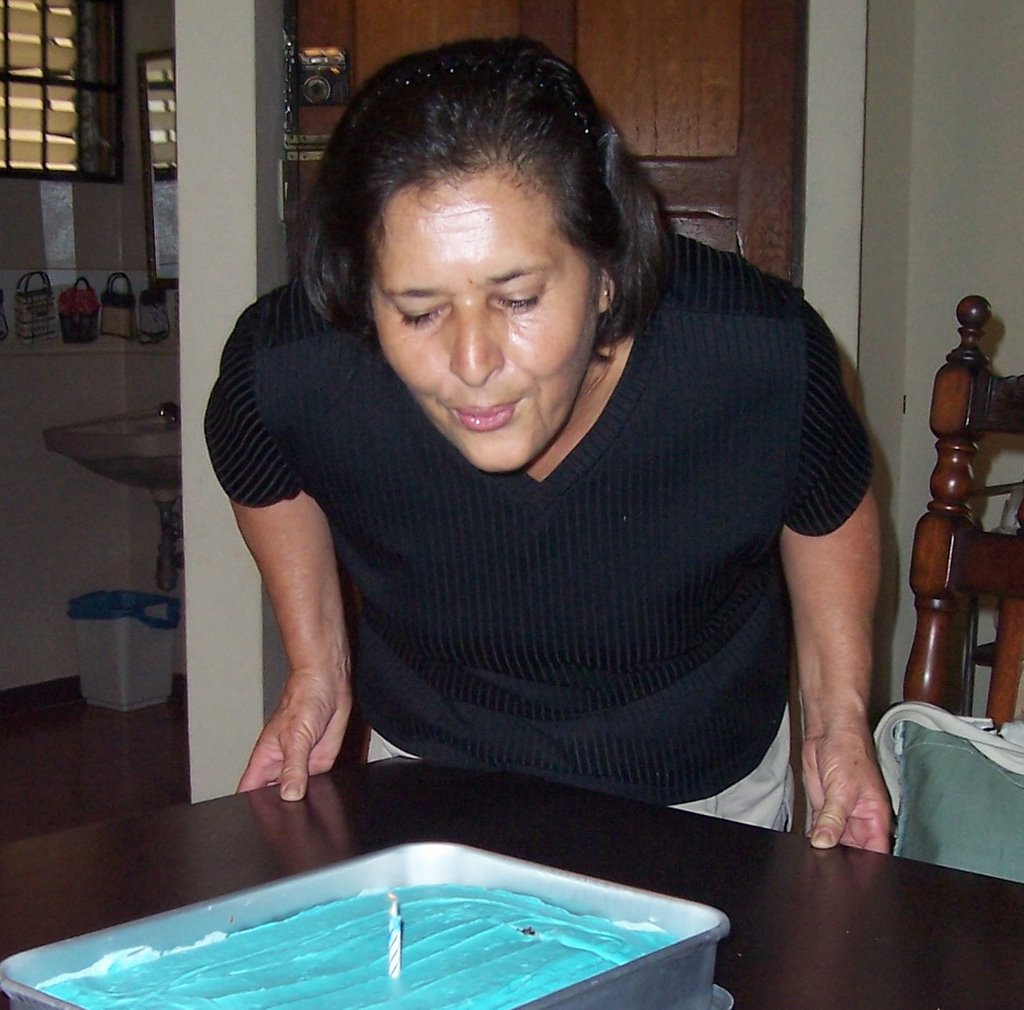
I think that the most special opportunity that we had this past month was the birthday that we celebrated with our friend Mayra (pictured with the cake above). She was celebrating her 60th birthday, but with her children in Florida she was looking to spend her day completly alone. Kelly planned a small celebration with several students who knew Mayra, and Mayra was touched deeply.
It’s interesting. We’ve grown up in a consumer culture and have been bombarded with commercials about the things that we need to acquire, but the older I get (32 years and counting), the more I realize that we have been created to give. Nothing creates a better feeling of satisfaction, and nothing more positively reflects the image of Christ that so many others in our society need to see.
 If you have been on the web reading blogs for any length of time, then you probably have been seeing icons like the above, or perhaps little “chicklets” with the letters “RSS” on them, and perhaps you’ve wondered to yourself, just what is RSS anyway? Well, wonder no more, this missionary has taken it upon himself to let you into the RSS secret.
RSS or Really Simple Syndication is for people who want to stay on the cutting edge of information, but don’t have time to browse to several sites in order to get it. RSS, allows that person, probably a person much like yourself, to “subcribe” to a “site feed” or special file of information that is coded especially for news readers. The news reader is set up in such a way that you can receive and organize information from several sources all in one interface, usually web-based. The reader also shows which feeds have been upated recently, so you can tell at a glance what you need to pay attention to.
Are you sold on the technology? Do you want to know where to get a newsreader? Well, Google offers a one as does Yahoo, but I am especially partial to Bloglines as their reader works both on browsers and handhelds.
Why do I spend such time talking about RSS? Because we’ve spent such time making this site thoroughly accessable via RSS.
- Want to get all of the latest information that is generated from disciplemexico.org? Click on the feed icon on the sidebar of this page in order to or here in order to add this site to your list of feeds (The feed icon is the orange symbol displayed on this post.)
- Want to track a certain topic that peaks your interest like Prayer or Mexico? Click on a category on the sidebar and then the feed icon at the top of the following page in order to subscribe to that specific theme.
- Are you a commenter but hate loosing track of your conversation? Subscribe to the comments individual posts that you comment on by clicking on the link that is available at the bottom of every post page in order to keep up with what’s being said. (Just click on the “Read more” link in order to reach the post page.)
Sure the setup may take a few extra minutes, but once you’ve started using RSS and newsreaders, you’ll wonder how you ever stayed informed without them! Go ahead give it a try, and of course add disciplemexico.org in the process.
 Guy Muse who writes the M Blog, has started a series on what God is teaching him these days. In part from his inspiration, and in part from the events of this past week, I’d like to chime in and share what God has been sharing with us these days.
Sometimes it takes more than one teaching in order to learn a lesson.
Jonathan went to the hospital last October in order to correct a congenital hernia. Those of you who have been reading this blog may remember this post about the event. He had the operation which corrected the problem, and one would think that we wouldn’t need to revisit the situation again, right? Wrong. This week we found that he had a hernia on the opposite side as well. He went in for the additional surgery yesterday. (He is recovering well. Thannk you to those who prayed.)
To us this has been an example of how, in the same way Jonathan needed two surgeries in order to correct his problem, we often need more than one teaching in order to learn the life lesson that God is trying to teach us. Kelly had the opportunity in Thursday’s chapel to share this reality. We think that we understand how to abide in Christ, and yet God reveals to us that we have much to learn. We feel that we have a handle on how to be a humble servant, and yet we find ourselves in the painful circumstance where we need to humble ourselves in front of others.
Is it some kind of terrible game that God plays with us? Although it feels that way sometimes, I would say no. I guess it is more like what Aslan revealed to Eustace Scrubb in the Chronicles of Narnia book, the Voyage of the Dawn Treader. Converted into a dragon because of his lust for treasure, Eustace found himself alone and pitiful until he had an encounter with the lion Aslan. Aslan took Eustace to a pool where he told Eustace to “undress and wash.” There, in front of the pool, Eustace found that he could shed the dragon skin. So he peeled it off of himself in order to wash in the pool. To his horror though, he found that no matter how hard he tried, the dragon skin would always reappear. It was only when Aslan “undressed him” with the deep cuts of his claws did Eustace find that he was truly free from his dragon skin and the isolation that it had brought upon him.
I believe that God teaches us his lessons in an ever deeper way, so that we too may shed the “old man” the natural, selfish mindset that keeps us from reflecting Christ in this life. His teaches often hurt, wounding our pride and self-reliance, but the product is always worth the price because, in the end, what remains is less of the corruption of this world and more of purity that reflects the kingdom of God.
Tomorrow, July 2nd, is the date for the Mexican presidencial elections, and as it is in America, the political structure can change tremendously with the election of a new administration. This new administration will be the administration under which we enter the country, apply for residency, live, and work during the remainder of our first term. Please pray that:
- God will guide the course of the elections, granting the people of Mexico the wisdom to choose the right candidate.
- God will begin to work in the heart and mind of the president-elect, giving him the tools that he needs to govern fairly, and
- That God will grant the evangelical church, including the Assemblies of God, favor in the eyes of this new government so that the work of God can continue unhindered.
 Preach Brother, Preach!
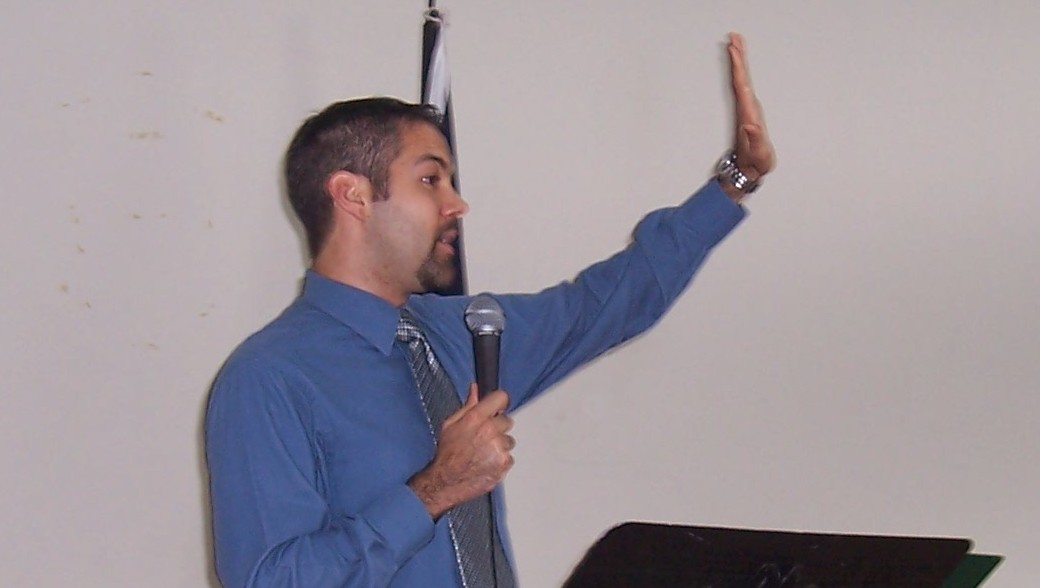
In order to keep a license to preach with the Assemblies of God, a minister needs to preach at least 10 times within a year’s time. Now while that wasn’t a challenge in the states where we preached over 150 times in the course of our itineration, we’ve had a more difficult time fulfilling that requirement here in Costa Rica, especially since we had to learn to preach in Spanish in order to secure a preaching date.
We’ll I’m happy to report that I got back on track in fulfilling my licensing requirements as I preached my first sermon in Spanish today before the professors and students of CINCEL. The sermon was on John 15, the passage in which Jesus talks about abiding in the vine. It is available here, for those of you who would like to read it in Spanish.
It’s hard to describe the significance that this event has for our lives. During our commissioning service, we were given a Spanish Bible with the admonishment to preach the Word in the language of the people to whom we have been called. I remember opening that Bible in the days after and finding it difficult to even understand a few words. Now to be able to not only read, but share the Word of God in Spanish is something of a dream come true. We are amazed at how far God has taken us, and reflecting on His faithfulness has increased our faith in God’s plan to use us to reach the people of Mexico.
 The sidewalks are empty. The shopping centers are deserted. There is an eerie silence in the streets. No, this is not a city-wide disaster drill, we’re watching the World Cup.
What is this you say? Well as you have noted in my previous post, soccer is not simply a sport, it is a way of life for many Costa Ricans specifically, and world sport fans in general. In fact, although baseball is America’s Game (and my favorite), soccer is truly the world’s sport. The World Cup is a tournament that takes place each 4 years, in which one country wins the right to be the world’s best in the world’s biggest pastime. 32 teams have classified in the years preceding this tournament and have won the opportunity to play for the title. The US is in it, and the Costa Ricans, having beaten the US last year in order to receive their classification have also entered into the tournament.
So what is this baseball loving north American supposed to do? Well, go out an buy a jersey and root for the home team of course! (Fortunately Costa Rica doesn’t come up against the US or Mexico in this round.) As a school, we watched the defeat of Costa Rica 3-2 against Germany last Friday, and we rooted and booed with the rest of the country glued to their TV sets. I realized, of course, that my Spanish wasn’t getting much better in the process, aside from being able to practice rolling my r’s with the announcers, but something happened in the process that was more profound than the conjugation of verbs. As I sat side-by-side with Ruddy Pizarro and his brother, sharing one of their passions, I found myself identifying just a little bit more with the culture that God has called us to serve and moving closer to the incarnational model of ministry that Christ modeled for us. And, who knows, although Spanish grammar is on the schedule, 8:00 AM tomorrow may just find us seated around another game as Costa Rica takes on Ecuador.
For more on the World Cup ’06 through the eyes of missionaries, Jim Cottrill, the man with his finger on the pulse of evangelical missionary bloggers at www.missionary-blogs.com, has posted some great highlights, including a World Cup Prayer Guide.
Photo credits: CLF (2006). Predator Absolute & Teamgeist. Retrieved from: https://www.flickr.com/photos/clf/85998174/
 When I wrote down my thoughts at the beginning of the year, I intended to form a base from which to work, a foundation on which I could build the rest of my missionary life. But, as many of realize, our intentions are not always what get carried out. My conversation teacher, Giselle Mata, says, “Hay algo entre el querer y el hacer.” As I have reviewed my concepts for living, I have found that in some areas, I have moved forward, but also that in several, I have lagged behind, or fallen flat. I guess that is precisely the reason why many don’t make resolutions, because they are afraid that they can never live up to them. On the contrary, I believe that without a clear goal we’ll never know when we have arrived, or possibly we’ll never arrive anywhere. With a goal it is easy to see when you have failed, but without one it is impossible to know when you have succeeded.
Evaluating the past 5 months, the areas in which I have failed the most have been in the areas that have required taking time. Not that I haven’t been without excuses. This morning, for example, caused me to find a car that could borrow to take a lunch that my daughter forgot to her school and make it back to attend chapel at CINCEL by 7:45 AM all after running 3 miles and getting the boys showered and ready. I say this not to complain, but to show that time is something that has a tendency to slip through my fingers. Unless I mark out a place in time intentionally, I never get the time that I need to do the things that I believe are important, like pray with purpose, read the Bible allowing the words to affect my soul, and be an intentional spouse and father. I have been recommitting myself to these priorities.
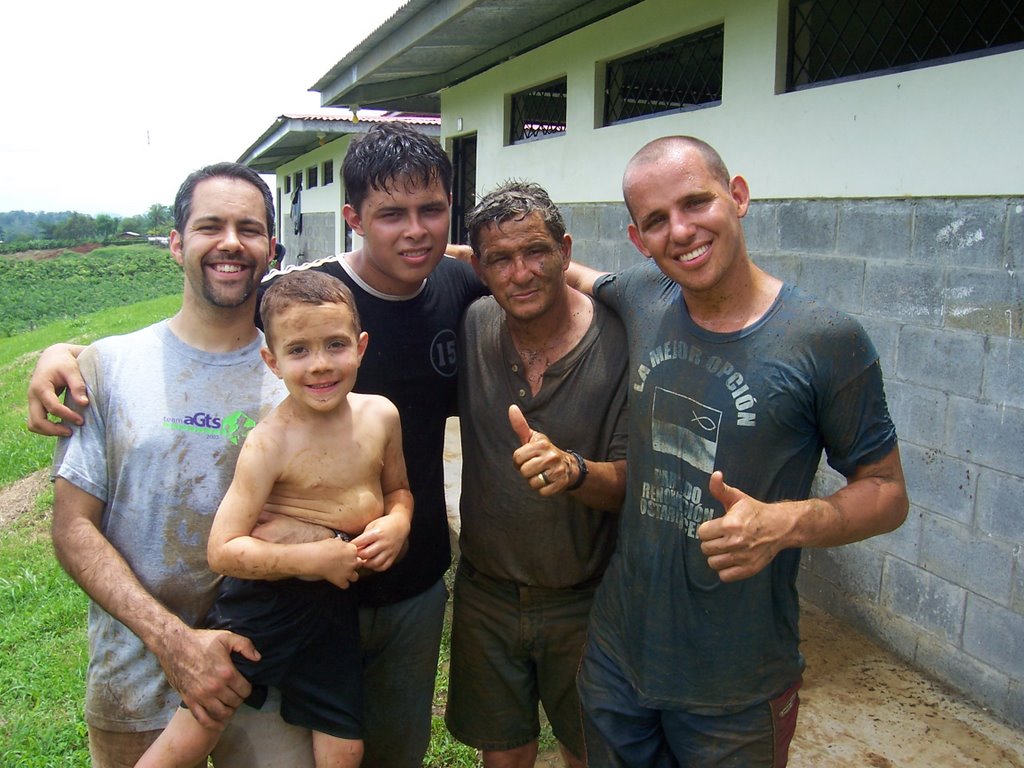
In recent days, Kelly and I have started reading a devotional “My Utmost for His Highest” together. It has served as a springboard for sharing our feelings and out prayer needs like never before. But it would never have been realized unless we had put aside the books for a few minutes in order to share this time together. This last weekend, Joseph and I went on to a Father/Son camp. The picture above is of Joseph and me along with a few of the friends that we made there. We spent time learning to build fires, (campfires), shoot BB rifles, and roll in the mud. Certainly none of these activities was necessary on its own, but the time that I spent with him was priceless, especially as I got to see him pass to the altar on Saturday night to accept Christ.
We received a statistic from DeLonn Rance, a fellow missionary and AGTS professor that said that 90% of missionaries spend less than 10 minutes a day in prayer. Why: I believe for lack of time. I can understand this. I see my time taken up with homework, study, projects, preaching, and miscellaneous activities everyday, but I can’t allow them to be my excuses. I need to take time, time from the urgent in order to do the most important. How about you?


